A Comprehensive Guide to Cryptocurrency Compliance with Islamic Principles in 2025
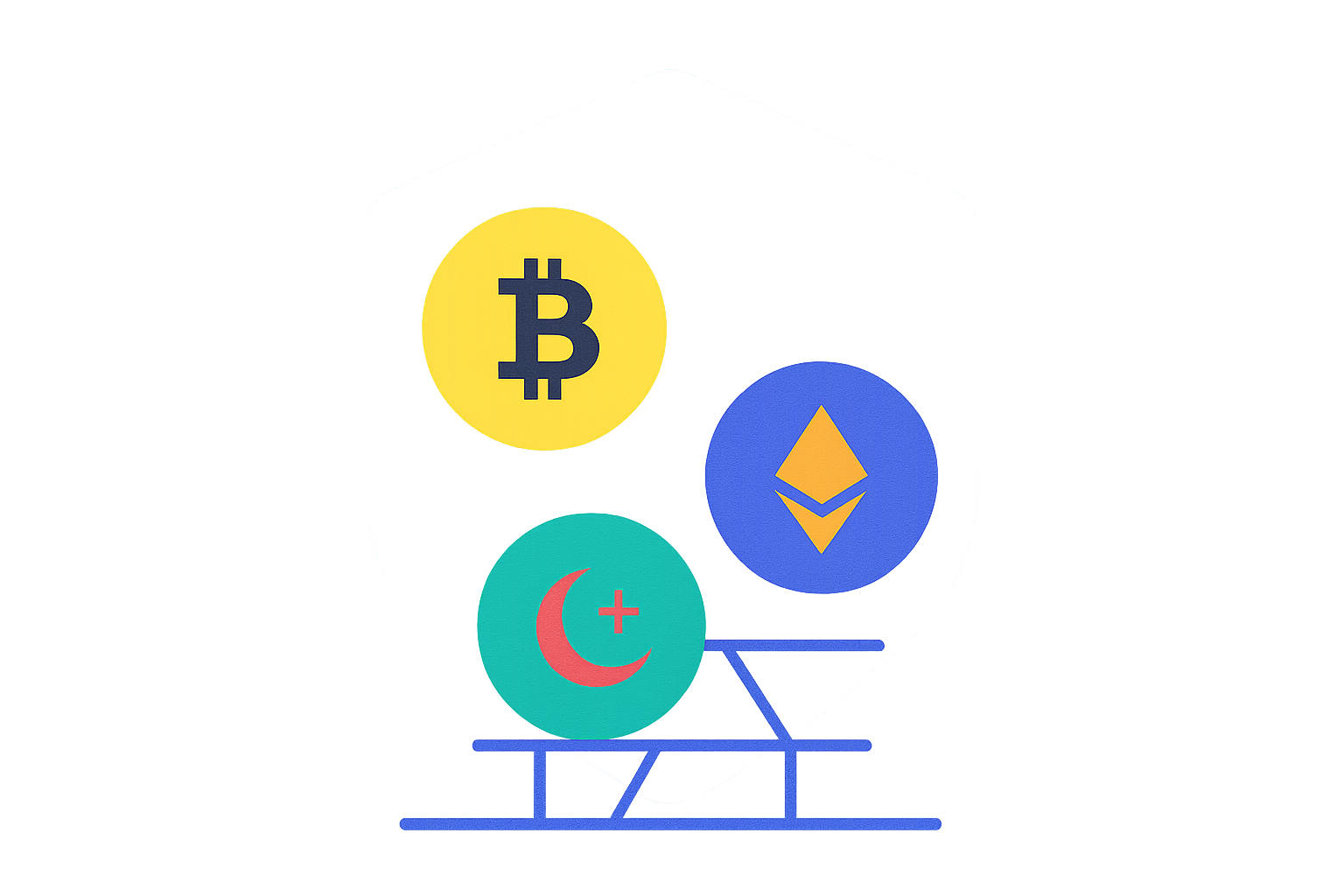
Are Digital Assets Permissible in Islam? A 2025 Guide to Bitcoin, Ethereum, and More
What Are Digital Assets?
Digital assets are virtual currencies secured by cryptography and operate on decentralized blockchain technology. Unlike fiat currencies, digital assets lack a central authority and rely on distributed ledgers to guarantee transparent, immutable, and secure transactions. Blockchain’s decentralized nature reduces fraud risk and empowers users, making assets like Bitcoin and Ethereum attractive for global transactions.
Digital assets possess several defining features that set them apart from traditional financial systems. First, decentralization ensures no central bank or government controls digital assets, aligning with Islamic principles of fairness and autonomy. Second, blockchain transparency publicly records all transactions, providing traceability. Third, cryptographic security prevents counterfeiting and unauthorized alterations. Fourth, utility enables digital assets to serve as mediums of exchange, stores of value, or platform utilities.
By 2025, digital assets dominate digital finance, with Bitcoin holding substantial market capitalization and Ethereum driving the DeFi and NFT ecosystems.
Digital Asset Types in 2025
Digital assets differ in utility, stability, and market adoption, influencing their Sharia compliance. Leading assets like Bitcoin (BTC) are often called "digital gold" due to their capped supply (21 million coins) and value preservation, widely accepted for payments and investment. Ethereum (ETH) supports smart contracts and DeFi, providing utility beyond currency and ranking as a top choice due to its stability and adoption.
Memecoins such as Dogecoin (DOGE) and Shiba Inu (SHIB) are influenced by social media trends and hype, exhibiting high volatility and speculation. Lesser-known altcoins with smaller market caps present high-risk, high-reward opportunities but are more susceptible to manipulation and volatility.
Sharia-compliant digital assets like Islamic Coin (ISLM) are purpose-built for Muslim investors, emphasizing ethical use cases and strict adherence to Sharia principles. These assets offer viable alternatives for investors seeking products consistent with their faith.
Islamic Finance Principles: A Framework for Digital Assets
Islamic finance, founded on Sharia law, emphasizes ethics, transparency, and social responsibility. Its key principles cover essential elements that every Muslim investor should understand.
First, the prohibition of Riba (interest) mandates that financial transactions avoid usury. This foundational principle has underpinned Islamic finance for centuries. Second, the prohibition of Gharar (excessive uncertainty) requires investments to minimize speculative risk and maintain full transparency throughout each transaction.
Third, the prohibition of Maysir (gambling) outlaws transactions resembling gambling. Fourth, ethical investment dictates that assets should benefit society and avoid prohibited activities such as alcohol and gambling. Fifth, profit and loss sharing encourages investment models like mudarabah (partnership) and musharakah (joint venture).
Digital assets are assessed under these principles to determine their permissibility, with scholars focusing on whether they qualify as Māl (wealth) and meet ethical standards.
Are Digital Assets Halal? Islamic Perspectives for 2025
Discussions on whether digital assets are halal or haram center on their classification as Māl, their functionality, and their compliance with Sharia. Islamic scholars present three main perspectives reflecting the diversity of thought in the Muslim community.
One view holds that digital assets do not constitute Māl. Scholars in this camp claim digital assets are overly speculative and lack intrinsic value, resembling gambling (maysir). Concerns include anonymity that enables money laundering and volatility that introduces excessive uncertainty (gharar). Memecoins like DOGE, driven by hype rather than real utility, are frequently deemed haram.
A moderate perspective sees digital assets as permissible digital property. Under strict conditions, digital assets can serve as a medium of exchange. Decentralization and blockchain transparency support Islamic principles of justice. Bitcoin’s traceability and Ethereum’s smart contract utility make them viable digital assets. Spot trading of BTC without interest-based leverage is generally considered permissible.
The third perspective categorizes digital assets as currencies. Scholars recognize digital assets as Māl if they offer utility such as platform access or asset ownership. Bitcoin and Ethereum qualify due to broad acceptance. Customary practice supports their use as currency within their respective ecosystems. Islamic Coin is tailored to Sharia standards, targeting the global Muslim population of 1.8 billion.
Although a universal consensus is lacking, most scholars agree digital assets are halal if they have intrinsic value—such as utility or acceptance—avoid prohibited activities, and minimize speculative risks, favoring long-term investment over day trading. Muslim investors should consult scholars and use platforms supporting Sharia-compliant assets like Islamic Coin (ISLM).
Why Do Some Scholars Consider Digital Assets Haram?
Certain scholars argue digital assets violate Islamic principles for several critical reasons. First, digital assets are not true currency, lacking physical backing or legal tender status and thus failing to meet traditional Islamic definitions.
Second, decentralized markets lack regulatory oversight, increasing the risk of unethical behavior. Third, speculative volatility in digital asset prices mimics gambling and conflicts with Islam’s requirement for minimal uncertainty. Fourth, anonymity can facilitate illicit transactions, though blockchain transparency may mitigate this risk.
Finally, speculative trading’s high risk contradicts Islamic principles of risk sharing, which call for equitable risk distribution among transaction parties.
Is Digital Asset Trading Halal?
The permissibility of digital asset trading depends on its structure and execution. Spot trading—buying and selling in spot markets—is generally halal if it avoids riba and speculation. For example, trading BTC/USDT for genuine economic purposes aligns with Sharia.
In contrast, futures and margin trading are usually haram due to leverage (riba) and substantial uncertainty (gharar). Scholars warn against high-leverage futures, which resemble interest-based loans.
Day trading (day trading) and scalping, or other short-term speculative strategies, are typically considered haram because they resemble maysir and do not generate real economic value.
Is Bitcoin Mining Halal?
Bitcoin mining involves validating blockchain transactions and earning BTC rewards. Its halal status remains under scholarly debate, with substantial arguments on both sides.
Supporters assert mining provides a legitimate service, upholding blockchain integrity, akin to labor-based income. This supports the Islamic principle that honest, beneficial work is halal.
Opponents highlight mining’s high energy consumption and environmental impact, conflicting with Islamic stewardship principles and responsibility toward the environment.
The consensus is that mining is halal if conducted ethically—using renewable energy, for example—and with scholarly consultation to ensure full Sharia compliance.
Is Staking Digital Assets Halal?
Staking involves locking digital assets in blockchain networks to validate transactions and earn rewards. Its permissibility in Islam is debated due to similarities with interest-based mechanisms.
Staking requires users to commit assets to support a proof-of-stake (PoS) network. Participants earn rewards, resembling interest in conventional finance, raising Sharia concerns.
Some scholars see staking as halal, likening it to mudarabah (profit-sharing partnerships), where investors allow networks to use their funds for valid purposes and receive returns based on performance—not guaranteed interest.
Others believe staking is haram if the rewards mimic riba (interest), especially in non-ethical or non-Sharia-compliant protocols, or if the network supports prohibited activities such as gambling or usurious lending.
Staking may be halal if the digital asset is Sharia-compliant—such as Islamic Coin or other approved tokens—the staking mechanism is based on real utility, not guaranteed return, and the network operates ethically and transparently.
Staking is available for various assets, including Islamic digital projects or Sharia-friendly tokens. Muslim investors seeking halal passive income can explore staking options that comply with Islamic finance principles. It is crucial to consult qualified Islamic scholars or financial advisors before staking or investing in digital assets.
Are NFTs Halal?
Non-fungible tokens (NFTs) are unique digital assets on the blockchain. Their halal status depends on several key considerations.
First, NFTs containing prohibited content—such as explicit imagery—are forbidden. NFTs with valid use cases, such as digital art or property rights, may be halal if not speculative.
Speculative NFT trading resembles maysir, making it haram as it shifts value from underlying assets to pure speculation.
Muslim investors should engage only with NFTs representing permissible assets and seek scholarly guidance. Verified NFT projects help mitigate risks for Muslim investors.
Is Trading on Digital Asset Platforms Halal?
Top digital asset platforms support Sharia-compliant trading through diverse features and options. Spot trading is halal when it avoids riba and speculation; zero maker fees and a wide range of trading pairs enhance accessibility.
Futures trading is largely haram due to leverage and gharar, requiring extra vigilance from Muslim investors.
Sharia-compliant assets are listed on these platforms, notably Islamic Coin (ISLM), which is purpose-built for Muslim investors and adheres to Islamic principles.
Digital Asset Investment: Halal or Haram?
Bitcoin, often called "digital gold," is viewed as a long-term store of value due to its capped supply and decentralization. Scholars argue it qualifies as Māl and is halal for investment if used ethically.
Ethereum’s role in DeFi and smart contracts further supports its status as a Sharia-compliant investment asset.
Nevertheless, investors face certain challenges. Price volatility introduces gharar (excessive uncertainty), which conflicts with Islamic investment principles. Short-term speculation undermines the Islamic mandate for meaningful, sustainable investment.
Furthermore, investment use cases must avoid prohibited industries to ensure full Sharia compliance.
Long-term investment in established assets—BTC, ETH, and ISLM—via spot markets is recommended, along with consulting scholars to ensure full compliance.
Conclusion
Digital assets present opportunities for Muslim investors but require careful scrutiny under Islamic finance principles. Bitcoin and Ethereum may be halal as digital assets or currencies if deployed ethically and with clear intent, while memecoins and speculative trading typically conflict with Sharia and Islamic values.
Platforms offering Sharia-compliant options—such as Islamic Coin and low-fee spot trading—enable halal digital asset engagement. Always consult Islamic scholars to align investments with faith-based principles and guarantee full Sharia compliance.
FAQ
Is Cryptocurrency Halal or Haram?
The halal or haram status of cryptocurrency depends on the interpretation of Sharia. Most contemporary scholars accept crypto as halal digital assets if not used for prohibited activities. Crypto investment with clear intent and transparent transactions is generally permissible in Islam.
Is Crypto Trading Gambling?
No, crypto trading is distinct from gambling. It involves investment decisions based on market analysis, technology, and project fundamentals, while gambling relies solely on luck. With sound strategy and research, traders can identify opportunities and manage risk rationally.
Is Crypto Mining Halal?
Most scholars consider crypto mining halal if performed lawfully and the energy used is not sourced from prohibited means. Permissibility depends on intent, method, and local legal regulations.
Is Crypto Halal According to Ustadz Adi Hidayat?
Ustadz Adi Hidayat holds that crypto may be halal if used for clear, beneficial transactions and not for speculation or activities involving riba or maysir. Ultimately, permissibility depends on use and intent.
How Does Islamic Law Distinguish Between Halal and Haram Cryptocurrency?
Halal cryptocurrency is transparent, avoids riba, and is used for legitimate purposes. Haram cryptocurrency involves pure speculation, gambling, or illegal activity. The key difference is clear utility and adherence to Sharia in use.
How Do Islamic Scholars Differ on the Halal or Haram Status of Cryptocurrency?
Islamic scholars have diverse views. Some regard crypto as halal due to its transparent, beneficial blockchain technology; others express concerns about speculation, value uncertainty, and potential illicit use. Consensus continues to develop as understanding of the technology and its Sharia implications deepens.
Is Bitcoin Investment Halal from an Islamic Sharia Perspective?
Bitcoin’s halal status is debated. Some scholars consider it halal due to its function as a digital asset; others reject it for its volatility and speculative nature. Consult your local scholar for guidance tailored to your beliefs.
Guide to Maximizing Returns with Top DeFi Yield Farming Strategies
Understanding Cross-Chain Solutions: A Guide to Blockchain Interoperability

Understanding DAO in the World of Cryptocurrency

Ultimate Guide to Top Crypto Exchange Aggregators for Efficient Trading

Understanding Bitcoin's Supply Limit: How Many Bitcoins Exist?

Introduction to GameFi: A Beginner's Guide to Blockchain Gaming
What is BULLA coin: analyzing whitepaper logic, use cases, and team fundamentals in 2026
What is on-chain data analysis and how does it reveal whale movements and active addresses in crypto?

What is Vodra (VDR) crypto: whitepaper logic, use cases, and fundamentals analysis for 2026
How do cryptocurrency competitors compare in market share, performance, and user adoption in 2026?

What is on-chain data analysis and how does it predict crypto market trends