Pi Wallet and Pi Coin Explained — Is It Worth Paying Attention to Now?
What Is a Pi Wallet & Why It Matters
A Pi wallet is a digital tool that lets users manage their Pi Coin assets. Whether you mine Pi Coin through the Pi Network or acquire it on an exchange, you need a wallet to store and transfer your holdings. These wallets may be official, community-supported, or provided by third parties. Without a secure wallet, you don’t truly control your Pi Coin, and you won’t be able to participate in the Mainnet, trading, or ecosystem applications in the future.
Current Pi Coin Price and Market Performance
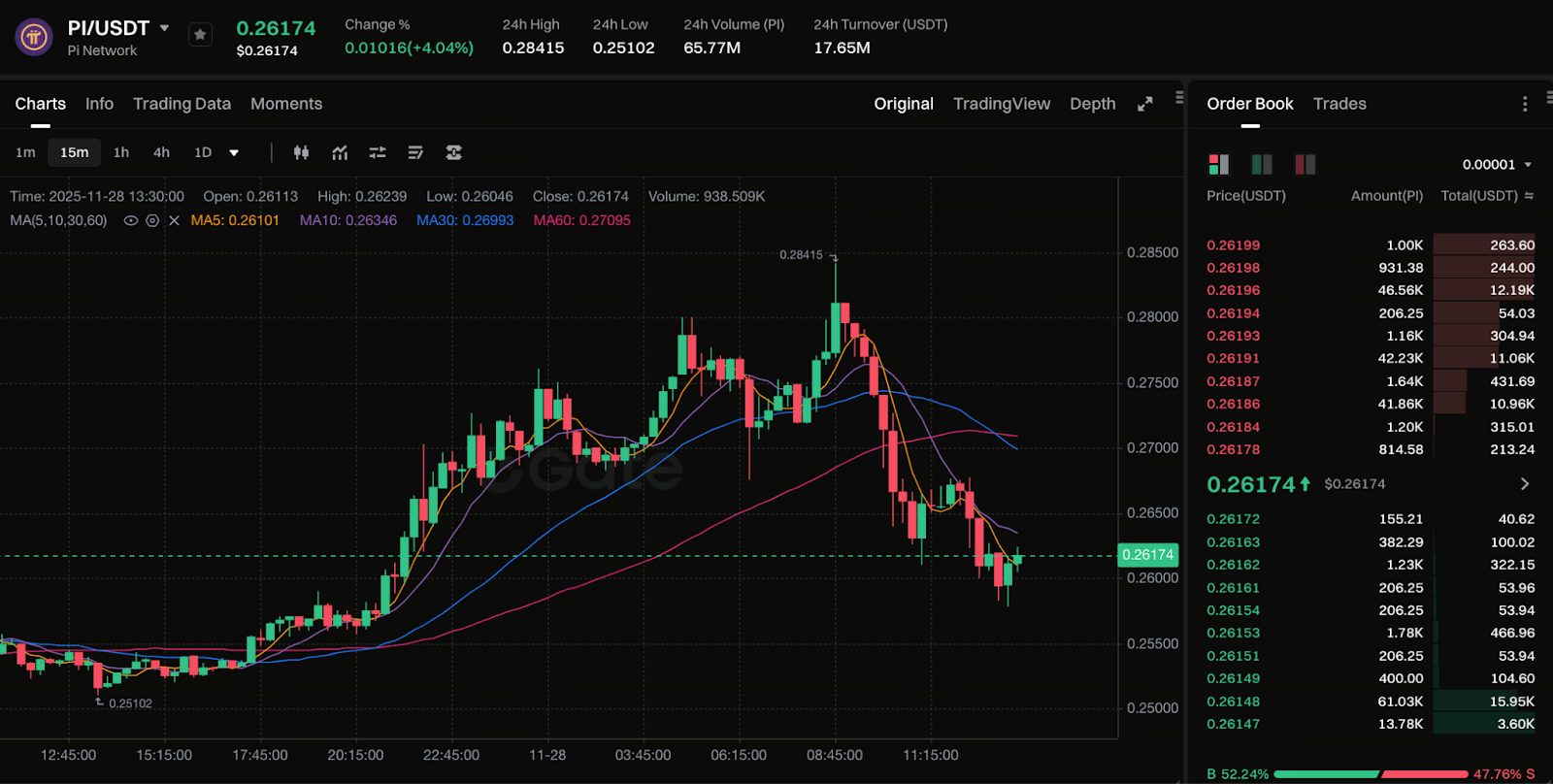
Chart: https://www.gate.com/trade/PI_USDT
Recently, Pi Coin has seen significant price swings. As of early November 2025, Pi Coin traded between roughly $0.17 and $0.29 before stabilizing around $0.25. Some more optimistic analyses predict Pi Coin could climb back to $0.42–$0.45 or higher by year-end. Overall, Pi Coin remains volatile. While there’s potential for short-term gains, the risks remain substantial.
Community Developments and Whale Accumulation Signals
Recently, reports in the Pi community indicate that major holders (“whales”) continue to accumulate Pi Coin. For example, one wallet address reportedly holds over 380 million Pi Coin, with an estimated value of tens of millions of dollars. Many investors interpret this as a bullish signal, since whale activity often reflects long-term confidence in the project.
There have also been updates concerning protocol upgrades, progress toward Mainnet launch, and compliance milestones, which have fueled optimism for Pi Coin’s ecosystem development.
Pi Wallet Security Warning: Beware of Scams and Fake Links
As Pi Coin’s popularity grows, scams like fake wallets, phishing sites, and impersonated customer support are becoming more common. The official team has warned users not to trust any site or app requesting your seed phrase or private key, especially if it’s from an unofficial domain or an unverified link. If your wallet security is weak—such as storing private keys improperly, leaking your seed phrase, or using untrusted wallets—you risk losing your Pi Coin to theft, regardless of your holdings.
Advice for Regular Users: How to Use Pi Wallets Securely
- Only use wallets recommended by the official team or verified by the community. Never trust wallets or links from unknown sources.
- Safeguard your seed phrase and private key. Never share them via social media, email, text, or any other channel.
- Be wary of promises of high returns or excessive hype. Whale accumulation is only a signal and does not guarantee price appreciation, so over-speculation can lead to financial loss.
- If you’re simply interested in Pi Coin or want to observe its development, treat Pi Coin as a research project for now. Wait for the ecosystem and wallet security to mature before making larger commitments.
Related Articles

The New Era of the NFT Market: From Explosive Peaks to Rational Transformation

The Next 100x Coin? Low-Cap Crypto Gem Analysis

MathWallet Quick Start Guide

Zora NFT Market Update: ZORA Token Airdrop, Layer-2 Expansion, and Creator Incentive Mechanisms

Ethereum Whales Revealed: Who Are the True ETH Giants in 2025?