
LCP_hide_placeholder
fomox
MarketsPerpsSpotSwapMemeReferral
More
New User Exclusive $690+
Search Token/Wallet
/

Solving Math Problems in Bitcoin Mining

2026-01-20 14:10
Bitcoin
Blockchain
Mining
PoW
Article Rating : 3
41 ratings
This comprehensive guide demystifies the complex mathematical foundations of Bitcoin mining, exploring how cryptographic puzzles secure the blockchain network. The article explains the Proof of Work consensus mechanism, the double SHA-256 hash function that miners solve, and how miners create these challenges through trial-and-error nonce adjustments. Readers will discover the decentralized nature of mining, where no central authority dictates mathematical problems—the protocol itself generates them dynamically. The guide covers difficulty adjustment mechanisms that maintain consistent 10-minute block creation rates and clarifies why ASICs are essential for competitive mining. Whether you're a crypto enthusiast, aspiring miner, or blockchain learner, this article provides essential insights into Bitcoin's elegant security design and the computational work underlying blockchain validation through detailed explanations and practical FAQs.
Solving Math Problems in Bitcoin Mining

Introduction to Bitcoin Mining Mathematics

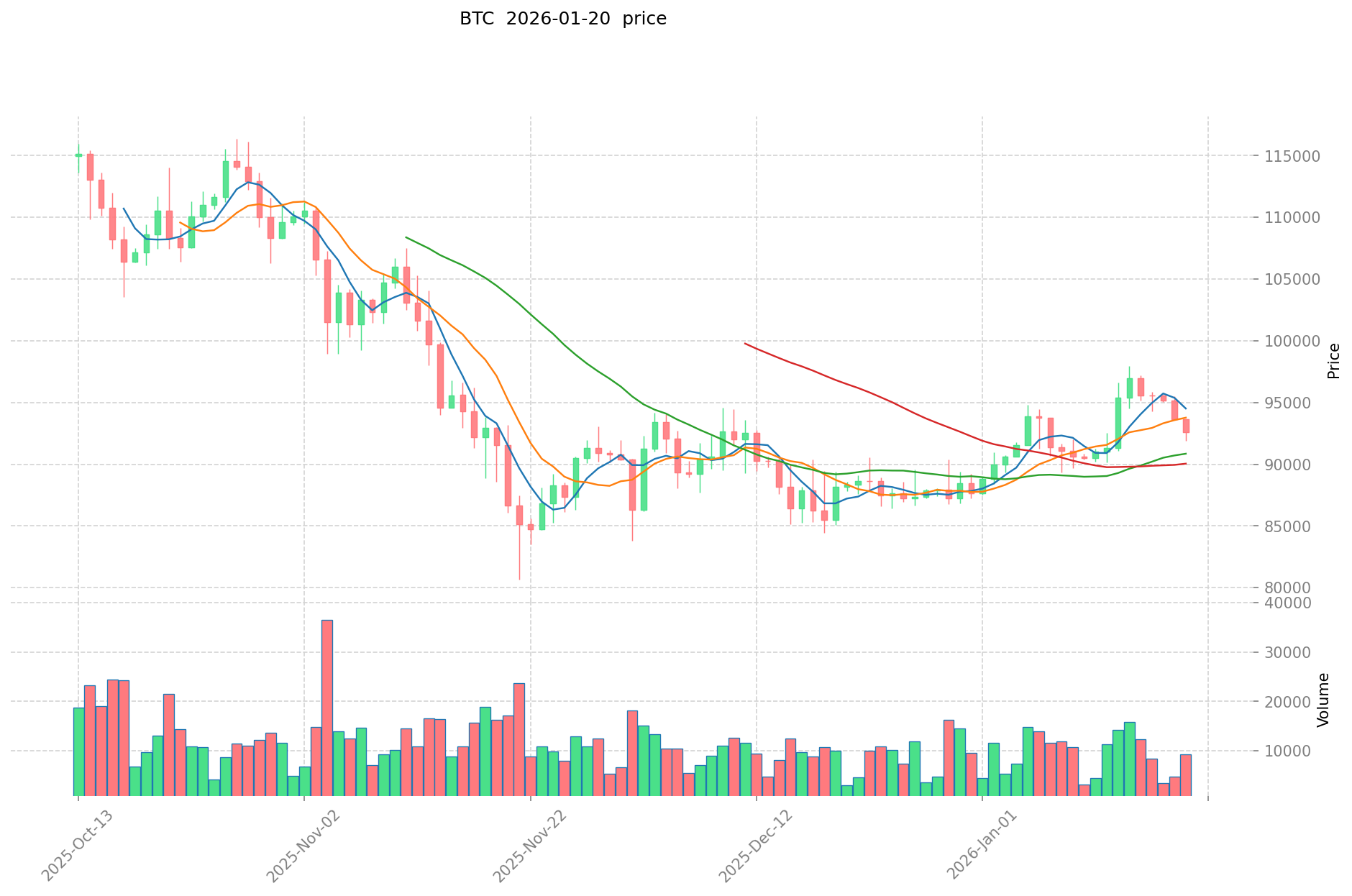
Bitcoin mining is a fundamental process that secures the blockchain network through complex mathematical computations. When people ask about the math problems solved during Bitcoin mining, they are essentially inquiring about the cryptographic puzzles that miners must solve to validate transactions and add new blocks to the blockchain. image_url This process is not only fascinating from a technical perspective but also crucial for maintaining the decentralized and secure nature of the Bitcoin network.
The mathematical challenges in Bitcoin mining serve multiple purposes: they prevent spam attacks, ensure fair distribution of new bitcoins, and create a competitive environment where miners invest computational resources to secure the network. Understanding these mathematical foundations helps us appreciate the elegance and security of Bitcoin's design.

Understanding Proof of Work Mechanism

To comprehend the math problems that Bitcoin miners solve, we must first understand the concept of proof of work (PoW). This consensus mechanism is the backbone of Bitcoin's security model. In the Bitcoin network, transactions are grouped into blocks, and these blocks need to be validated before being permanently added to the blockchain.

The proof of work process works as follows: miners compete to solve complex mathematical puzzles to find a hash that meets specific criteria set by the network. This competition ensures that no single entity can easily manipulate the blockchain, as doing so would require an enormous amount of computational power. The difficulty of these puzzles is dynamically adjusted to maintain a consistent block creation rate, ensuring network stability.

The beauty of proof of work lies in its asymmetry: it is computationally expensive to find a valid solution, but extremely easy for other nodes to verify that solution. This property makes Bitcoin mining both challenging and transparent, as any participant can verify the validity of a miner's work.

The Double SHA-256 Hash Function Explained

The core mathematical problem that Bitcoin miners solve involves the double SHA-256 hash function. SHA-256 (Secure Hash Algorithm 256-bit) is a cryptographic hash function that takes an input of any size and produces a fixed-size output of 256 bits (64 hexadecimal characters). Bitcoin applies this function twice, hence the term "double SHA-256."

Here's how the process works in detail: The hash function takes the block header (which includes the previous block's hash, timestamp, merkle root of transactions, and other metadata) along with a nonce value, and produces a unique hash output. For example, a valid hash might look like: 0000000000000000000a1b2c3d4e5f6g7h8i9j0k1l2m3n4o5p6q7r8s9t0u1v2w3x.

Miners continuously hash different combinations of data by changing the nonce value until they find a hash that is below a certain target value. This target value determines the mining difficulty and is represented by the number of leading zeros required in the hash. The more leading zeros required, the more difficult it is to find a valid hash. This target is adjusted approximately every 2,016 blocks (roughly every two weeks) to ensure that new blocks are added to the blockchain at an average rate of one block every 10 minutes, regardless of the total computational power in the network.

The computational intensity of this process is staggering. Miners may need to perform billions or even trillions of hash calculations before finding a valid solution. This is why modern Bitcoin mining requires specialized hardware called ASICs (Application-Specific Integrated Circuits) designed specifically for performing SHA-256 calculations at high speeds.

Who Creates the Mining Challenges

A common question about Bitcoin mining is: who creates these mathematical problems for miners to solve? The answer reveals the truly decentralized nature of the Bitcoin network. Unlike traditional systems where a central authority sets challenges, in Bitcoin, the math problems are created through the protocol itself, and miners participate in generating them.

Miners create the math problems themselves by constructing the block header and selecting a nonce value. The nonce is a 32-bit field (a number between 0 and approximately 4.3 billion) that miners can adjust to produce different hash outputs. The process is essentially a trial-and-error approach: miners start with a nonce value of zero, hash the block header, check if the resulting hash meets the target criteria, and if not, increment the nonce and try again.

This process requires significant computational power because miners need to make numerous hash attempts before finding a valid solution. When a miner successfully finds a hash that meets the target criteria, they broadcast the new block to the network. Other nodes quickly verify the solution (which is computationally trivial compared to finding it), and if valid, the block is added to the blockchain, and the miner receives the block reward plus transaction fees.

The decentralized creation of these challenges ensures that no single entity controls the mining process. The difficulty adjustment mechanism, which is hardcoded into the Bitcoin protocol, automatically responds to changes in the network's total computational power, maintaining the security and consistency of the blockchain.

Conclusion

Bitcoin mining involves solving complex mathematical problems using the double SHA-256 hash function, a process that is fundamental to the security and integrity of the blockchain. These cryptographic puzzles are not created by any central authority but emerge from the decentralized protocol itself, with miners participating in a competitive process of trial and error to find valid solutions.

By understanding the mathematical equations and mechanisms behind Bitcoin mining, we can better appreciate the sophistication of this decentralized system. Miners play an essential role in maintaining the network by dedicating their computational power to solving these complex equations. Through continuously verifying transactions and adding new blocks to the blockchain, miners ensure the security, transparency, and reliability of the Bitcoin network. This elegant combination of cryptography, game theory, and distributed consensus represents one of the most significant innovations in digital currency technology.

FAQ

What is a hash function in Bitcoin mining and how does it work?

A hash function converts input data into a fixed-length string of characters. In Bitcoin mining, miners use SHA-256 to hash block data repeatedly until finding a result below the target difficulty. This process requires computational effort, securing the network and validating transactions through proof-of-work consensus.

What is Proof of Work (PoW)? What are the mathematical principles behind it in Bitcoin mining?

PoW is a consensus mechanism where miners solve complex cryptographic puzzles to validate transactions. Miners compete to find a hash value below a target difficulty by repeatedly hashing block data with different nonces. The first to solve it adds the block to the blockchain and earns rewards. This process requires significant computational work, making attacks economically infeasible.

How is Bitcoin mining difficulty calculated and adjusted?

Bitcoin mining difficulty adjusts every 2,016 blocks(approximately 2 weeks)based on network hash rate. The protocol targets 10-minute block intervals. If blocks are mined faster, difficulty increases; if slower, it decreases. This maintains consistent block generation time regardless of total mining power.

What role does SHA-256 algorithm play in Bitcoin mining?

SHA-256 is the cryptographic hash function that miners use to solve complex mathematical puzzles. Miners repeatedly hash block data until finding a hash below the target difficulty, securing the network and validating transactions through proof-of-work consensus.

What is a Nonce value in mining? Why do miners need to continuously try different Nonce values?

A Nonce is a random number used once in Bitcoin mining. Miners repeatedly try different Nonce values to find a hash result that meets the difficulty target. This process, called Proof of Work, secures the network and validates transactions.

How is the target difficulty determined in Bitcoin mining?

Bitcoin adjusts target difficulty every 2,016 blocks to maintain a 10-minute average block time. The network recalculates based on actual mining time versus expected time, automatically increasing difficulty if blocks are found faster or decreasing if slower.

What is the role of Merkle trees in mining?

Merkle trees efficiently organize and verify transactions in blocks. They allow miners to quickly validate transaction integrity and enable light clients to confirm transactions without downloading entire blocks, enhancing security and efficiency in Bitcoin mining.

Why does Bitcoin mining require solving mathematical problems? What is the purpose of this design?

Bitcoin mining requires solving complex mathematical problems to secure the network and validate transactions. This design achieves three goals: it makes attacks economically unfeasible, distributes new bitcoins fairly through proof-of-work, and creates a transparent consensus mechanism that doesn't rely on trusted intermediaries. The difficulty adjusts automatically to maintain consistent block creation time.

* The information is not intended to be and does not constitute financial advice or any other recommendation of any sort offered or endorsed by Gate.

Share

Content

Introduction to Bitcoin Mining Mathematics

Understanding Proof of Work Mechanism

The Double SHA-256 Hash Function Explained

Who Creates the Mining Challenges

Conclusion

FAQ

Related Articles
Guide to Maximizing Returns with Top DeFi Yield Farming Strategies

Guide to Maximizing Returns with Top DeFi Yield Farming Strategies

This article provides a comprehensive guide on optimizing DeFi yield farming through the use of DeFi yield aggregators. It explains how these platforms enhance passive income and streamline complex processes, making yield farming more accessible and efficient. Readers will understand the challenges DeFi aggregators solve, including high gas fees and the complexity of managing multiple protocols. The article is structured to cover the operation, benefits, risks, and popular platforms in the DeFi aggregator landscape. Keywords are strategically placed for readability and scanability.
2025-12-24
Understanding Cross-Chain Solutions: A Guide to Blockchain Interoperability

Understanding Cross-Chain Solutions: A Guide to Blockchain Interoperability

This article delves into the transformative role of cross-chain bridges in blockchain interoperability, essential for the seamless transfer of digital assets. It explains what cross-chain bridges are, outlines their benefits for DeFi operations, and evaluates security challenges. Readers will learn about the top cross-chain bridges and how they innovate crypto transactions. Key points include addressing interoperability issues, enhancing transaction efficiency, and promoting integration across blockchains. With a focus on security audits, liquidity, and community support, the article serves as a comprehensive guide for users exploring cross-chain solutions.
2025-12-24
Understanding DAO in the World of Cryptocurrency

Understanding DAO in the World of Cryptocurrency

This article explores Decentralized Autonomous Organizations (DAOs) as innovative governance structures in the Web3 ecosystem, detailing their operation, benefits, risks, and notable examples. It highlights how DAOs enable transparent community-driven decision-making using blockchain technology and smart contracts. The piece addresses issues related to security and token concentration, while outlining participation and investment potentials. Key content discusses the operational framework of DAOs, how to join them, benefits and risks, with emphasis on their transformative impact on digital governance.
2025-12-24
Ultimate Guide to Top Crypto Exchange Aggregators for Efficient Trading

Ultimate Guide to Top Crypto Exchange Aggregators for Efficient Trading

This article serves as an ultimate guide to understanding top crypto exchange aggregators, essential for optimizing trading efficiency in the decentralized finance landscape. It discusses their function in pooling liquidity, executing optimal trades, and reducing slippage. Readers will gain insights into selecting the right aggregator to meet individual trading needs, considering factors like cost, security, and interface usability. With detailed comparisons, the article addresses challenges and benefits for beginners and advanced traders alike. Emphasizing crucial concepts like decentralization and self-custody, it offers strategic advice for engaging with these platforms effectively.
2025-12-14
Understanding Bitcoin's Supply Limit: How Many Bitcoins Exist?

Understanding Bitcoin's Supply Limit: How Many Bitcoins Exist?

The article delves into Bitcoin's finite supply of 21 million coins, shedding light on its implications for the cryptocurrency ecosystem. It explores how Bitcoin's halving mechanism controls supply, impacting mining rewards and inflation. The piece also discusses what happens after all coins are mined, the role of transaction fees, and introduces the Lightning Network's innovation for scalability. Addressing the loss and theft of bitcoins, it highlights security challenges and advancements. Ideal for crypto enthusiasts and investors, the article explains Bitcoin's value proposition rooted in scarcity and decentralization.
2025-12-04
Introduction to GameFi: A Beginner's Guide to Blockchain Gaming

Introduction to GameFi: A Beginner's Guide to Blockchain Gaming

Introduction to GameFi explores the revolutionary intersection of gaming and finance through blockchain technology, highlighting potential ownership and earning opportunities in the digital gaming sphere. The guide is tailored for beginners seeking to immerse themselves in GameFi, addressing questions on its operation, rewards, and DeFi integration. The article methodically covers GameFi basics, its financial mechanisms, major protocols, how to begin playing, and the role of DAOs, followed by current industry challenges and growth prospects. Optimized for easy readability and comprehensive understanding, this article delivers key insights into the emerging GameFi sector.
2025-12-12
Recommended for You
What is BULLA coin: analyzing whitepaper logic, use cases, and team fundamentals in 2026

What is BULLA coin: analyzing whitepaper logic, use cases, and team fundamentals in 2026

BULLA coin introduces decentralized accounting and on-chain data management innovation built on BNB Smart Chain, eliminating intermediaries while ensuring real-time transaction verification. The platform addresses critical gaps in cryptocurrency infrastructure by embedding accounting logic directly into smart contracts, enabling transparent audit trails and regulatory compliance. Real-world applications include seamless transaction imports across multiple exchanges, comprehensive crypto portfolio tracking, and secure record-keeping for investors. Trade import tools enhance user experience by automating data categorization and consolidation. Founded in 2021 by blockchain architect Benjamin with support from experienced fintech designers and engineers, BULLA Networks demonstrates active development momentum with continuous smart contract iterations through early 2026. The 2026-2027 strategic roadmap prioritizes network infrastructure expansion and enhanced security protocols, positioning BULLA as a robust decen
2026-02-08
What is on-chain data analysis and how does it reveal whale movements and active addresses in crypto?

What is on-chain data analysis and how does it reveal whale movements and active addresses in crypto?

On-chain data analysis reveals cryptocurrency market dynamics by examining active addresses and transaction metrics that expose whale movements and investor behavior. This comprehensive guide explores how blockchain data serves as a critical market indicator, demonstrating the correlation between large holder activities and price movements—such as FLOKI's 950% surge in whale transactions. The article covers whale movement tracking, holder distribution patterns showing 73.47% concentration among major stakeholders, and on-chain fee trends as cycle indicators. Essential metrics include active addresses reflecting genuine network participation, transaction volumes revealing strategic positioning, and network congestion patterns during market cycles. By tracking these interconnected indicators through platforms like Glassnode and Gate, investors and traders can identify market sentiment shifts, anticipate price movements, and distinguish institutional activity from retail participation, making on-chain analysis i
2026-02-08
What is Vodra (VDR) crypto: whitepaper logic, use cases, and fundamentals analysis for 2026
What is Vodra (VDR) crypto: whitepaper logic, use cases, and fundamentals analysis for 2026

Vodra (VDR) is a decentralized blockchain platform revolutionizing creator economics through AI-powered infrastructure and transparent compensation systems. The project addresses the creator economy's core challenge—unfair intermediary-controlled monetization—by enabling direct audience-to-creator transactions without traditional gatekeepers. VDR's whitepaper establishes a dual-layer architecture combining artificial intelligence for content assistance with blockchain verification for security and transparency. The platform's real-world applications extend from content monetization to DeFi ecosystem integration, real-world asset tokenization, and AI-driven automation by 2026. Founded by former Google engineer Yu Hu with backing from prominent investors like Dragonfly and The Spartan Group, Vodra positions itself at the intersection of Web3 infrastructure and creator empowerment. Key acquisition channels include Gate and other decentralized exchanges, with development roadmaps targeting API standardization, en
2026-02-08
How do cryptocurrency competitors compare in market share, performance, and user adoption in 2026?

How do cryptocurrency competitors compare in market share, performance, and user adoption in 2026?

This comprehensive analysis examines how major cryptocurrency competitors diverge across market share, performance, and user adoption in 2026. Bitcoin maintains dominance above 60% while institutional investors adopt core-satellite portfolios allocating 60-80% to Bitcoin and 15-25% to Ethereum. Layer-2 solutions command a decisive 40% market share advantage over legacy networks, with Solana leading at 1,133 TPS and driving institutional TVL beyond $50 billion. Regional adoption varies dramatically: Asia-Pacific accelerates at 11.6% CAGR driven by digital transformation, while North America concentrates 75% institutional users. Trading activity concentrates on Gate and leading platforms, with top five cryptocurrencies maintaining 61% combined market share. Understanding these divergent trajectories is essential for investors navigating competitive positioning and institutional capital flows.
2026-02-08
What is on-chain data analysis and how does it predict crypto market trends
What is on-chain data analysis and how does it predict crypto market trends

This comprehensive guide explores on-chain data analysis as a foundational tool for predicting cryptocurrency market trends. The article examines how blockchain metrics—including active addresses, transaction volume, and network health—reveal genuine market sentiment beyond price action alone. Key sections analyze whale movements as reliable leading indicators of market direction, demonstrating how large holder distribution patterns expose institutional positioning before broader price shifts occur. The guide further demonstrates how gas fee trends and network congestion serve as real-time sentiment gauges across different blockchain architectures. By tracking these on-chain indicators on platforms like Gate, traders can identify market opportunities before mainstream recognition. The article emphasizes that while on-chain analysis provides measurable predictive value through transaction flow analysis and holder behavior patterns, it functions best as a complementary tool alongside other market analysis metho
2026-02-08
How Does VeChain (VET) Community and Ecosystem Activity Compare to Other Layer 1 Cryptocurrencies in 2026?

How Does VeChain (VET) Community and Ecosystem Activity Compare to Other Layer 1 Cryptocurrencies in 2026?

This comprehensive analysis examines VeChain's community and ecosystem activity relative to competing Layer 1 blockchains in 2026. The article evaluates VeChain's multimillion-follower social infrastructure across Discord and Telegram, extensive developer ecosystem featuring 5,000+ DApps, and robust on-chain metrics with 2.5 million daily active addresses. Key findings highlight VeChain's enterprise-grade differentiation through supply chain solutions, institutional partnerships with Fortune 500 organizations, and proven real-world applications. While VeChain demonstrates lower developer numbers than Ethereum and Solana, its focused positioning in enterprise adoption, regulatory compliance through MiCA alignment, and strategic partnerships with DNV and Boston Consulting Group establish competitive advantages in B2B blockchain adoption, positioning VET as a distinctive Layer 1 leader within enterprise-centric ecosystems.
2026-02-08