LCP_hide_placeholder
fomox
MarketsPerpsSpotSwapMeme Referral
More
Smart Money Recruitment
Search Token/Wallet
/

Polygon Bridge Explained: Latest Developments, Price Data, and Future Outlook

Beginner
Quick Reads
A thorough overview of the latest updates, market performance, and ecosystem advancements surrounding Polygon Bridge (cross-chain bridge). This resource delivers real-time price data and insights into community governance trends for the Polygon PoS Bridge, empowering users to better understand cross-chain operations for crypto assets.

What Is Polygon Bridge?


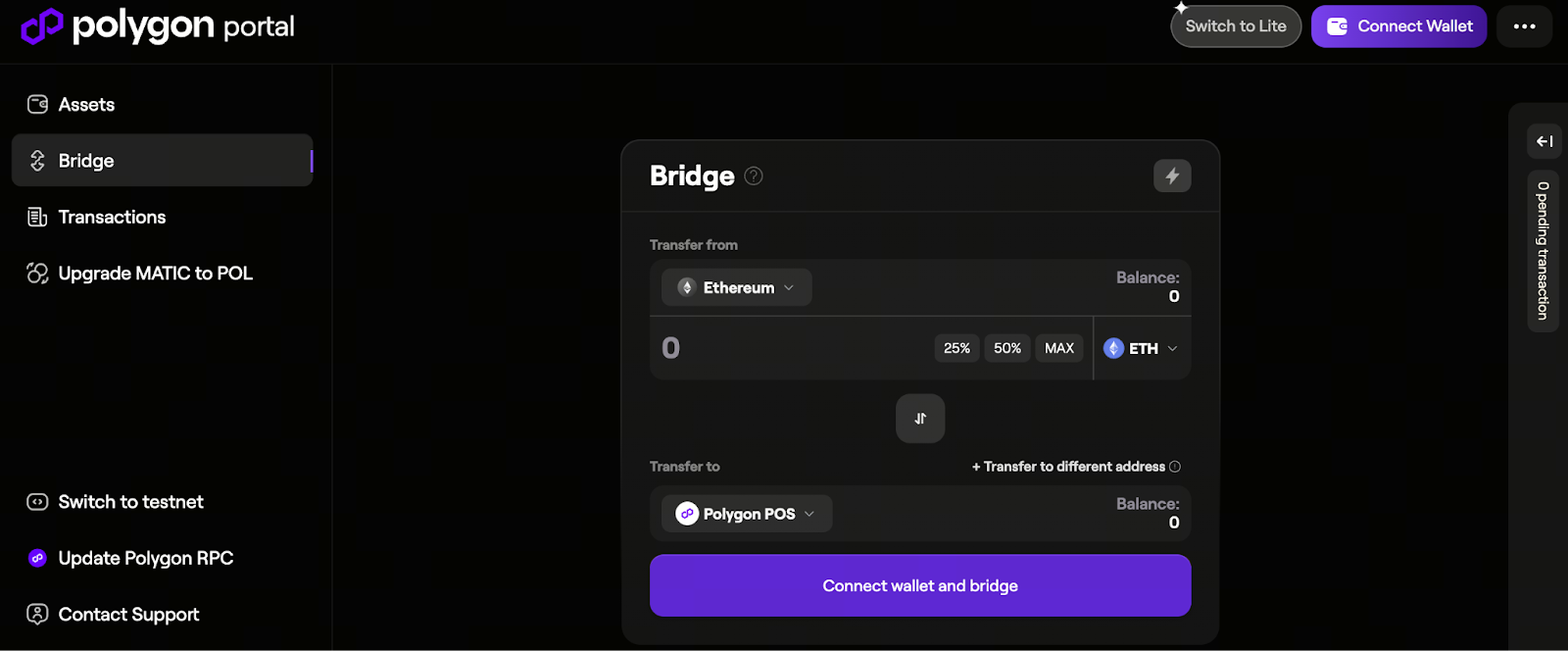
Source: https://portal.polygon.technology/bridge

Polygon Bridge is a cross-chain bridge protocol that connects the Ethereum mainnet with the Polygon network, enabling users to transfer tokens between Ethereum and Polygon quickly and securely. By leveraging smart contracts, the bridge ensures decentralized, transparent, and secure locking and releasing of assets, serving as a fundamental component for interoperability within the Polygon ecosystem.

This bridging solution dramatically reduces users’ cross-chain costs by lowering high Ethereum gas fees and speeding up transactions. It supports the transfer of ETH, ERC-20 tokens, and NFTs between both chains.

Polygon PoS Bridge Real-Time Price Overview

Among the active assets on Polygon Bridge are stablecoins transferred via the Polygon PoS Bridge, such as Bridged USDC (USDC.E). Real-time market data shows USDC.E trading in a narrow range of $0.99 to $1.00, with a market cap in the hundreds of millions of dollars.

For example:

  • Bridged USDC (USDC.E) currently trades at about $0.9997, showing minimal price fluctuation over 24 hours and a market capitalization reaching several hundred million dollars.
  • This demonstrates that most cross-chain bridge assets remain stably pegged to fiat values, making them suitable for transfers between Polygon and Ethereum.

Price stability is essential for the DeFi ecosystem that depends on cross-chain bridges. It represents both the value users bridge across chains and the market’s confidence in Polygon’s bridge functionality.

Polygon Community Governance Trends and Bridge Asset Usage Proposals

Recently, governance discussions about bridge assets in the Polygon community have drawn significant attention. One proposal suggested deploying approximately $1.3 billion in PoS Bridge stablecoin reserves (including DAI, USDC, and USDT) for yield-generating strategies, such as earning extra returns through DeFi protocols.

The proposal was met with widespread skepticism from community members, who expressed concerns about security and asset risk. As a result, the proposal was not advanced. The community felt that reusing these funds could increase user risk and lacked a clear opt-in mechanism to protect participants’ interests.

This episode highlights that Polygon Bridge is more than just a technical channel—it’s a focal point for governance and risk management. Cross-chain assets are vital to Polygon’s growth, and their governance will directly affect the ecosystem’s long-term stability.

Core Functions and Risk Considerations of Polygon Bridge

Core functions:

  1. Cross-chain asset transfers: Users can bridge assets between Ethereum and Polygon in either direction, enabling efficient interoperability.
  2. Enhanced DeFi experience: Bridged assets can be used to participate in DeFi protocols, liquidity mining, and other activities on Polygon.
  3. Lower transaction costs: Bridging to Polygon significantly reduces gas fees compared to transacting directly on Ethereum.

Potential risk considerations:

  • Security: Cross-chain bridges have long been prime targets for hackers due to their large asset pools and complex logic.
  • Proposal risk: If the community proposes yield strategies for bridge assets and risks are not properly managed, user funds could be at risk.
  • Asset liquidity volatility: The liquidity and fee structure of some bridged tokens may impact users’ transaction costs.

Impact of Cross-Chain Bridge Ecosystem on Polygon’s Development

Cross-chain bridges are not only foundational infrastructure for the Polygon network but also have a profound impact on ecosystem growth. For instance, the ERC-20 bridge has been the most active channel for bridging between Polygon and Ethereum, with locked funds once exceeding several billion dollars, underscoring user reliance on cross-chain bridge services.

As Polygon continues to refine bridge technology, strengthen security, and improve governance mechanisms, Polygon Bridge is expected to maintain its pivotal role in the Layer-2 ecosystem, delivering a superior cross-chain service experience for users.

Summary

Polygon Bridge is the core protocol linking Ethereum and Polygon, supporting substantial cross-chain asset flows and DeFi participation. Analysis of real-time price data (such as the stable performance of Bridged USDC) and community governance trends shows that Polygon Bridge serves not only as a technical interface but also as a critical factor in ecosystem risk and strategic direction.

For users interested in cross-chain transactions or engaging with the Polygon ecosystem, understanding Polygon Bridge’s features, risks, and market dynamics will help formulate more effective asset management strategies.

Author: Max
* The information is not intended to be and does not constitute financial advice or any other recommendation of any sort offered or endorsed by Gate Web3.
* This article may not be reproduced, transmitted or copied without referencing Gate Web3. Contravention is an infringement of Copyright Act and may be subject to legal action.

Related Articles

The Next 100x Coin? Low-Cap Crypto Gem Analysis
Beginner

The Next 100x Coin? Low-Cap Crypto Gem Analysis

This article analyzes cryptocurrency projects with low market capitalization that may be noteworthy in 2025, offering analysis from the perspectives of technology, community engagement, and market potential. Additionally, the report offers guidance on coin selection and highlights key risk factors for new investors.
Best Crypto Wallets to Watch in 2025: Top Picks for Security and Convenience
Beginner

Best Crypto Wallets to Watch in 2025: Top Picks for Security and Convenience

Discover the most reliable crypto wallets for 2025. Whether you require a hot wallet or a cold wallet, multi-chain compatibility, or enhanced privacy and security, this guide will assist in identifying the best crypto wallet for your needs.
The New Era of the NFT Market: From Explosive Peaks to Rational Transformation
Beginner

The New Era of the NFT Market: From Explosive Peaks to Rational Transformation

In 2025, the NFT market is transitioning from a period of frenzy to a more rational phase. This article explores the latest trends in NFT marketplace platforms, analyzes shifts in trading volume, and highlights upcoming opportunities.
What Is Jupiter? A Complete Guide to Solana’s Leading Decentralized Exchange Aggregator
Beginner

What Is Jupiter? A Complete Guide to Solana’s Leading Decentralized Exchange Aggregator

Jupiter stands as the core decentralized exchange aggregator within the Solana ecosystem, delivering users the best prices, minimal slippage, and seamless cross-pool liquidity integration. This article thoroughly examines Jupiter's mechanisms, exploring its features, strengths, trading processes, and future outlook. You'll gain a clear understanding of why Jupiter has emerged as the primary entry point for trading on Solana.
Best Metaverse Projects in 2026: Seizing the Next Digital Wave
Beginner

Best Metaverse Projects in 2026: Seizing the Next Digital Wave

A comprehensive analysis of the leading Metaverse projects for 2026: Explore key developments from Web2 giants like Meta and Roblox, as well as Web3 frontrunners including The Sandbox and Decentraland. This article delivers the latest trends, technological breakthroughs, and investment opportunities in the Metaverse sector.
MathWallet Quick Start Guide
Beginner

MathWallet Quick Start Guide

MathWallet, the multi-chain wallet, has introduced new Plasma mainnet support and completed its Q3 token burn. This article serves as a quick start guide for beginners. It explains how to register, back up your wallet, and switch networks. Users can efficiently grasp the wallet’s core features through this guide.