

Search Token/Wallet
Mobile Phone Mining | Guide and Review
2026-01-06 15:18
Crypto Tutorial
DeFi
How to buy crypto
Mining
Web 3.0
Classificação do artigo : 3.5

67 classificações
Explore effective mobile cryptocurrency mining solutions for your phone. Find out which apps perform best, what real earnings to expect, potential risks to your device, and strategies to avoid scams. Start mining without investment today with trusted methods and insights from leading crypto experts.
## Introduction
Mobile cryptocurrency mining is the process of generating digital assets using the computational power of smartphones. Unlike traditional mining, it doesn't require purchasing expensive equipment like ASICs or GPU rigs. Instead, users install mobile apps that leverage the phone's CPU—or, less commonly, GPU—to run calculations that earn cryptocurrency rewards.
## Mobile Mining Trends in Recent Years
Interest in mobile mining has surged in recent years, especially among crypto beginners seeking to experiment without major financial commitments. However, it's crucial to understand the actual capabilities and limitations of mobile devices and the risks involved in this type of mining.
## Why Mobile Mining Has Gained Popularity
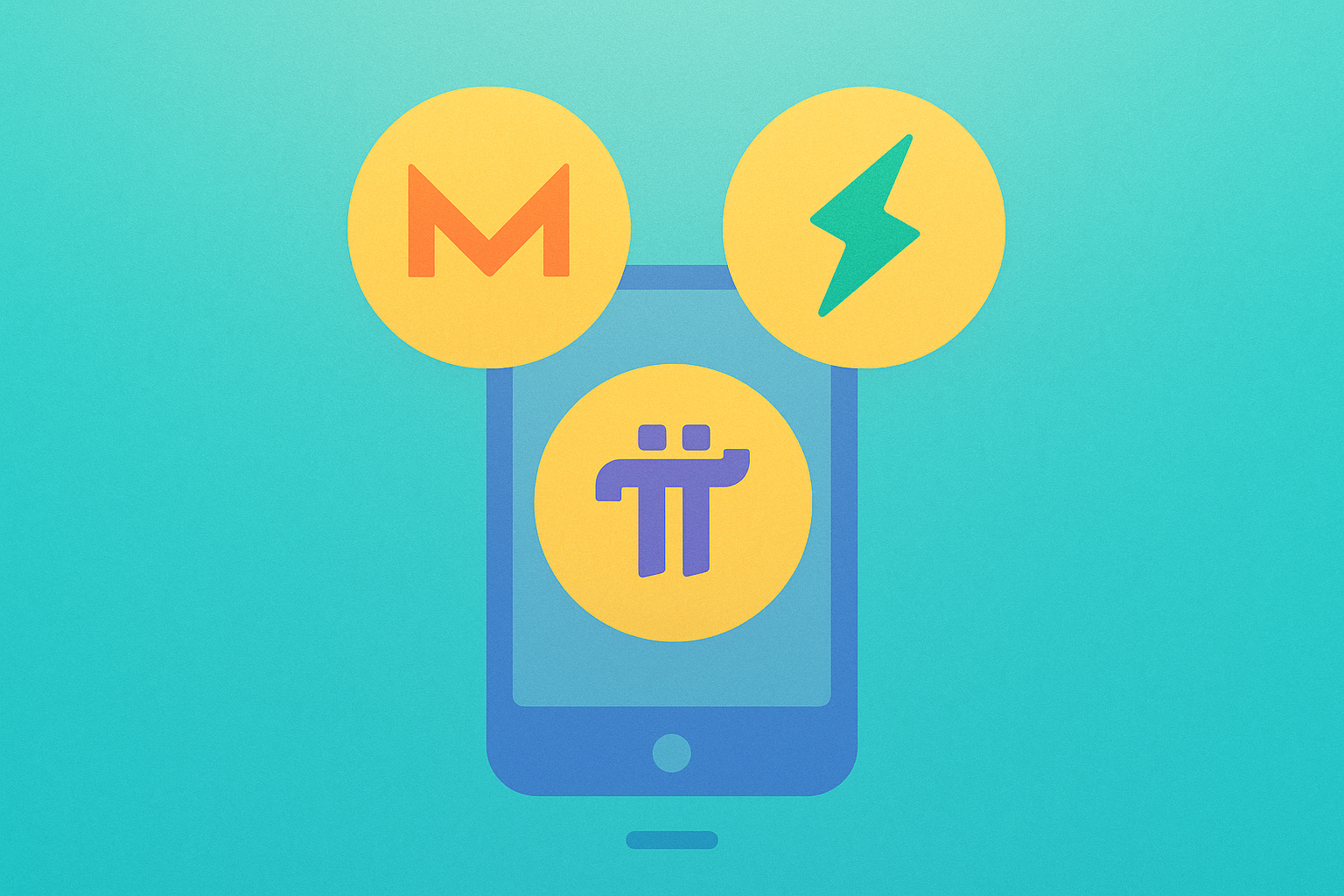
Mobile mining has become mainstream thanks to several factors. Widespread access to high-performance smartphones and reliable internet—even in developing regions—has played a key role. A wave of new apps and projects (such as **Pi Network**, **Bee Network**, **Electroneum**) have made participation simple and accessible. The Web3 movement and decentralized technologies have further embedded mobile mining into crypto culture.
Mobile mining also serves as an alternative to costly cloud investments and traditional mining hardware. For many, it’s an entry point to gain practical experience and earn a small amount of tokens without exposing personal finances to risk.
## Which Cryptocurrencies Can Be Mined on Mobile?
Only select cryptocurrencies are suitable for mobile mining. The most popular and accessible options for smartphones include:
- **Monero (XMR)** — one of the few coins optimized for CPU mining. The RandomX algorithm keeps [Monero](https://dex.gate.com/crypto-wiki/article/what-is-monero-xmr-market-overview-price-at-440-06-market-cap-7-65b-and-24h-trading-volume-20251221) popular among mobile miners.
- **Electroneum (ETN)** — specifically designed for mobile mining. ETN pioneered “simulated mining” on smartphones.
- **Pi Network (PI)** — rewards users for ecosystem participation rather than actual computation.
- **Bee Network** — a social-driven project similar to Pi.
- **[TON](https://dex.gate.com/crypto-wiki/article/what-is-ton-and-how-does-it-compare-to-other-blockchain-projects-20251206) (The Open Network)** — tied to Telegram, TON can't be mined directly on phones but allows users to participate through staking or node operations.
- **Verus Coin, DuinoCoin, and others** — lesser-known coins with active communities and CPU mining support.
## How Does Mobile Mining Work?
Mobile mining operates similarly to traditional mining on computers or ASIC devices. The smartphone performs complex mathematical operations to solve cryptographic puzzles that validate transactions and add new blocks to the blockchain. When successful, either as part of a mining pool or solo, the phone earns a share of the block reward.
There are two main approaches:
1. **Local Mining** — the smartphone’s CPU solves hash functions directly (e.g., MinerGate).
2. **Simulated or Pseudo-Mining** — apps like [Pi Network](https://dex.gate.com/crypto-wiki/article/what-is-pi-coin-pi-network-complete-guide-to-pi-network-value-price-and-selling-pi-coins-20251230) simulate mining and issue rewards for user activity, reputation, and daily check-ins.
Most devices join mining pools, combining resources for greater efficiency. Earnings are distributed based on each participant's contribution.
### What Happens Inside the Device During Mining
Mining puts significant strain on a smartphone, driving its processor to near-maximum workload as it repeatedly solves complex calculations to verify blockchain transactions. This not only increases power consumption but also causes noticeable heating. Since most phones rely on passive cooling without fans, internal temperatures can quickly reach critical levels—especially in hot environments or when using cases that hinder heat dissipation. These conditions threaten device stability and may trigger performance throttling or automatic shutdowns to prevent overheating.
Continuous mining drains the battery much faster than regular usage. Frequent charging cycles degrade battery health; after just a few months of active mining, battery capacity may drop by 15–30%, shrinking runtime. Other apps also slow down as mining monopolizes CPU resources—web pages load sluggishly, UI responsiveness drops, and in severe cases, the device might freeze or reboot.
Prolonged heat and heavy workloads accelerate wear on internal components, including the motherboard, power chips, and even the screen if it remains on for extended periods. Older or budget devices, not built for sustained heavy use, are especially vulnerable. Some apps run hidden background processes that continue mining even with the screen off, keeping the phone constantly active and increasing the risk of hardware failure.
Overall, mobile mining is not only low-yield but also puts major stress on your device, potentially shortening its lifespan dramatically.
### Mobile Device Mining Capabilities
Despite clear limitations, modern smartphones can perform basic CPU mining. Flagship models equipped with Snapdragon 8 Gen 2 or Apple A17 Pro chips can rival entry-level PCs in performance.
Nevertheless, profits are extremely low. Even around-the-clock mining at 1–2 H/s (hashes per second) typically yields only a few cents daily. Still, mobile mining remains relevant for testing, learning, or participating in emerging crypto ecosystems.
## Types of Mobile Mining
### Mining via Apps
Leading apps include **MinerGate**, **CryptoTab**, **Electroneum**, **AntPool Mobile**, and **StormGain Cloud Miner**. Some provide real mining, while others pay out for user activity.
### Cloud Mining on Mobile
Cloud mining lets users rent remote server resources instead of taxing their smartphone’s hardware. For example, **StormGain Cloud Miner** lets users "press a button" every four hours to receive rewards, eliminating device strain.
Withdrawals typically go to crypto wallets (Trust Wallet, MetaMask, or major exchanges). Some apps set minimum withdrawal thresholds from $1 up to $10 or more. Users often report high withdrawal fees or long payout wait times.
## Top Mobile Mining Apps
Popular smartphone mining apps:
- **MinerGate Mobile Miner** — supports true algorithms, works with Monero, Bytecoin, AEON, and others.
- **CryptoTab Browser** — features “browser mining,” though actual earnings are activity-based rewards.
- **Pi Network** — one of the most downloaded projects, boasting over 50 million users.
- **[Bee Network](https://dex.gate.com/crypto-wiki/article/discover-the-bee-network-launch-and-bee-token-ecosystem-essentials-20251222)** — Pi’s alternative, rewarding users for activity and referrals.
- **StormGain Cloud Miner** — offers “cloud” BTC mining without taxing your device.
Profitability and efficiency vary widely. MinerGate requires a powerful phone and delivers authentic, if modest, returns. CryptoTab is often criticized for low payouts and an opaque reward structure. Pi Network isn’t yet traded openly but is preparing for listing on major exchanges.
## Mining on Mobile Without Investment
This approach means users don’t spend money on hardware, subscriptions, or cloud server rentals. Earnings come from “cloud click” mechanics or reward systems.
### Examples:
- **Pi Network** — daily button click and network participation.
- **Bee Network** — similar to Pi, with team-building features.
- **StormGain Cloud Miner** — BTC rewards for daily activity.
The upside is zero financial risk. The downside is minimal earnings and high reliance on the developers’ long-term strategy.
## How to Avoid Scams
To steer clear of mobile mining scams—especially apps boasting “easy earnings without investment”—follow basic digital security practices and maintain a critical approach to new software.
Always download apps from **official stores** (Google Play, App Store), as these platforms screen for malware. Avoid APKs from unknown sites or forums—they often contain viruses or hidden scripts that can compromise your device or steal data.
Before installing, check **user reviews and ratings** and review the **developer’s track record**. If an app claims you’ll earn Bitcoin effortlessly on your phone but has poor ratings and numerous complaints about withdrawals or account locks, that's a clear warning sign. High-yield promises—especially VIP accounts or boosters that cost real money—are rarely legitimate. Many scam apps operate like Ponzi schemes: users pay for access to nonexistent features, and only the developers profit.
Enhance your security by enabling **two-factor authentication (2FA)** on all crypto wallets, exchanges, and services. This protects accounts even if passwords are compromised. Use **antivirus software**—especially on Android, which is less tightly secured than iOS. Consider a **VPN** when connecting to public Wi-Fi to protect your data and prevent interception.
In the end, vigilance is your best defense. If an offer sounds too good to be true, it probably is. Avoid any app that promises dozens of dollars per day with no investment, lacks transparency about rewards and withdrawals, and doesn't provide clear information.
## Real Earnings from Mobile Mining
Most users earn between **$0.01 and $0.30 per day** depending on the app, device, and time spent. For instance, a Galaxy S22 Ultra running MinerGate can mine about 0.0004 XMR per day, roughly $0.08.
Projects like Pi or Bee don’t have established market values since their tokens aren’t traded yet. If Pi launches successfully, its token could trade for $1–$10, making participation potentially worthwhile.
## Mobile Mining Issues and Risks
- **Device Wear**: Continuous heavy usage shortens battery lifespan by 30–50%.
- **Overheating**: Especially problematic in hot weather or with budget phones.
- **Security Risks**: Some apps collect personal data, run hidden mining processes, or infect devices with malware.
- **Financial Fraud**: Dozens of fake apps promise quick profits but never pay out.
## Conclusion
### Is Mobile Mining Worth It?
For beginners, **yes**—as a risk-free way to explore crypto. For experienced users, **no**—returns are too low and risks (device wear, scams) too high.
**Recommendations:**
- Choose reputable apps;
- Avoid mining on your primary smartphone;
- Start with no-investment projects;
- Monitor user feedback and official news from developers.
## FAQ
### What Is Mobile Mining? How Does It Work?
Mobile mining uses a smartphone to mine cryptocurrency by solving complex mathematical problems for coin rewards. However, it’s inefficient—phones have limited computing power, causing overheating and rapid wear. Cloud mining apps are a safer alternative.
### How Much Can You Earn with Mobile Mining—and How Is Income Calculated?
Mobile mining income depends on device performance and coin prices. Typical earnings range from $0.01 to $0.10 per day. Income is calculated by mining speed and the market value of mined coins.
### How Does Mobile Mining Affect the Device? Can It Damage the Battery and Hardware?
Mobile mining accelerates battery wear, increases device temperature, and hampers performance. Extended use may damage the battery and hardware.
### Is Mobile Mining Safe? What Risks Should You Consider?
Mobile mining presents serious risks: low efficiency, device overheating, rapid battery degradation, and high energy costs that often outweigh potential profits. Mobile mining is generally not recommended.
### What Are the Best Mobile Mining Apps—and How Should You Choose?
Top mobile mining apps include Bitcoin Miner Pro, MinerGate, Mobile Miner, AA Miner, and ECOS. For best results, check energy efficiency, user ratings, and supported cryptocurrencies.
### How Is Mobile Mining Different from Mining on a Computer or ASIC Miner?
Mobile mining uses less power but delivers low performance. Computers and ASIC miners consume more energy but are far more efficient. ASIC miners are purpose-built for maximum mining output.
### What Are the Hardware Requirements for Mobile Mining? Can Any Phone Mine?
Ordinary smartphones can mine low-requirement coins like Ethereum 2.0. Modern devices can participate in Proof of Stake (PoS) networks. High-end processors and large memory are not strictly necessary.
### How Do You Start Mining on Your Phone? What Are the Steps?
Download a mining app, create an account, and verify your identity. Tap the mining button to start. Connect to a mining pool. Monitor battery and data usage. Rewards are deposited automatically to your wallet.
* As informações não se destinam a ser e não constituem aconselhamento financeiro ou qualquer outra recomendação de qualquer tipo oferecido ou endossado pela Gate.
Artigos relacionados
Complete Guide to Blockchain Gas Fees in Web3
This article provides a comprehensive guide to blockchain gas fees, a crucial aspect of Web3 transactions affecting costs, processing times, and user experiences. It details what gas fees are, their calculations, and the role of different tokens, helping users navigate transaction challenges like failures due to insufficient funds or network congestion. The piece also explores innovative solutions like Instant Gas and token-based reward systems, ensuring seamless interaction on major blockchain networks. Ideal for blockchain users seeking to optimize transaction success rates, the guide underscores the importance of understanding gas fees in ensuring efficient Web3 participation.
2025-12-19

Understanding Bitcoin's Supply Limit: How Many Bitcoins Exist?
The article delves into Bitcoin's finite supply of 21 million coins, shedding light on its implications for the cryptocurrency ecosystem. It explores how Bitcoin's halving mechanism controls supply, impacting mining rewards and inflation. The piece also discusses what happens after all coins are mined, the role of transaction fees, and introduces the Lightning Network's innovation for scalability. Addressing the loss and theft of bitcoins, it highlights security challenges and advancements. Ideal for crypto enthusiasts and investors, the article explains Bitcoin's value proposition rooted in scarcity and decentralization.
2025-12-04

A Detailed Analysis of Cryptocurrency Mining Principles and Mechanisms
A comprehensive exploration of cryptocurrency mining principles and mechanisms, detailing how Bitcoin mining generates profits and examining the benefits and challenges of different mining approaches. This guide enables beginners, investors, and tech enthusiasts to master essential blockchain concepts.
2025-12-21
Understanding Scrypt: A Comprehensive Overview of the Cryptographic Method
# Understanding Scrypt: A Comprehensive Overview of the Cryptographic Method
Scrypt is a memory-intensive cryptographic algorithm that revolutionized cryptocurrency mining by prioritizing accessibility over specialized hardware dominance. This comprehensive guide explores Scrypt's technical foundations, historical development since 2009, and widespread adoption across major cryptocurrencies like Litecoin and Dogecoin. Designed for investors, traders, and blockchain enthusiasts, this article addresses key concerns about mining decentralization, network security, and sustainable digital asset participation. Discover how Scrypt enables democratic mining ecosystems, influences market dynamics on platforms like Gate, and maintains relevance amid evolving environmental considerations. Whether you're evaluating cryptocurrency investments or understanding proof-of-work alternatives to SHA-256, this overview provides essential insights for informed decision-making in the digital financial landscape.
2025-12-28
What Is Bitcoin Halving? A Complete Guide to the Crypto Industry’s Biggest Countdown
Discover Bitcoin halving: how it works, its price impact, and the upcoming halving schedule. This comprehensive guide is tailored for beginner crypto investors on Gate.
2026-01-04
Pi Network Launch Status and Timeline Update
# Introduction
This comprehensive guide details Pi Network's evolution from mobile mining launch in March 2019 through its transformative February 20, 2025 Open Network release. Readers will discover complete timeline information, understand the February 2025 mainnet launch mechanics, and learn how this milestone impacts existing miners and new users. The article examines launch-day price dynamics, ecosystem achievements including 10.14 million migrated pioneers and 100+ operational dApps, and upcoming development phases. Whether you're an established Pi holder, prospective participant, or cryptocurrency enthusiast, this guide provides essential insights into Pi Network's current status, trading availability on Gate, and long-term ecosystem expansion roadmap through 2025 and beyond.
2025-12-27
Recomendado para si

What is BULLA coin: analyzing whitepaper logic, use cases, and team fundamentals in 2026
BULLA coin introduces decentralized accounting and on-chain data management innovation built on BNB Smart Chain, eliminating intermediaries while ensuring real-time transaction verification. The platform addresses critical gaps in cryptocurrency infrastructure by embedding accounting logic directly into smart contracts, enabling transparent audit trails and regulatory compliance. Real-world applications include seamless transaction imports across multiple exchanges, comprehensive crypto portfolio tracking, and secure record-keeping for investors. Trade import tools enhance user experience by automating data categorization and consolidation. Founded in 2021 by blockchain architect Benjamin with support from experienced fintech designers and engineers, BULLA Networks demonstrates active development momentum with continuous smart contract iterations through early 2026. The 2026-2027 strategic roadmap prioritizes network infrastructure expansion and enhanced security protocols, positioning BULLA as a robust decen
2026-02-08

What is on-chain data analysis and how does it reveal whale movements and active addresses in crypto?
On-chain data analysis reveals cryptocurrency market dynamics by examining active addresses and transaction metrics that expose whale movements and investor behavior. This comprehensive guide explores how blockchain data serves as a critical market indicator, demonstrating the correlation between large holder activities and price movements—such as FLOKI's 950% surge in whale transactions. The article covers whale movement tracking, holder distribution patterns showing 73.47% concentration among major stakeholders, and on-chain fee trends as cycle indicators. Essential metrics include active addresses reflecting genuine network participation, transaction volumes revealing strategic positioning, and network congestion patterns during market cycles. By tracking these interconnected indicators through platforms like Glassnode and Gate, investors and traders can identify market sentiment shifts, anticipate price movements, and distinguish institutional activity from retail participation, making on-chain analysis i
2026-02-08

What is Vodra (VDR) crypto: whitepaper logic, use cases, and fundamentals analysis for 2026
Vodra (VDR) is a decentralized blockchain platform revolutionizing creator economics through AI-powered infrastructure and transparent compensation systems. The project addresses the creator economy's core challenge—unfair intermediary-controlled monetization—by enabling direct audience-to-creator transactions without traditional gatekeepers. VDR's whitepaper establishes a dual-layer architecture combining artificial intelligence for content assistance with blockchain verification for security and transparency. The platform's real-world applications extend from content monetization to DeFi ecosystem integration, real-world asset tokenization, and AI-driven automation by 2026. Founded by former Google engineer Yu Hu with backing from prominent investors like Dragonfly and The Spartan Group, Vodra positions itself at the intersection of Web3 infrastructure and creator empowerment. Key acquisition channels include Gate and other decentralized exchanges, with development roadmaps targeting API standardization, en
2026-02-08

How do cryptocurrency competitors compare in market share, performance, and user adoption in 2026?
This comprehensive analysis examines how major cryptocurrency competitors diverge across market share, performance, and user adoption in 2026. Bitcoin maintains dominance above 60% while institutional investors adopt core-satellite portfolios allocating 60-80% to Bitcoin and 15-25% to Ethereum. Layer-2 solutions command a decisive 40% market share advantage over legacy networks, with Solana leading at 1,133 TPS and driving institutional TVL beyond $50 billion. Regional adoption varies dramatically: Asia-Pacific accelerates at 11.6% CAGR driven by digital transformation, while North America concentrates 75% institutional users. Trading activity concentrates on Gate and leading platforms, with top five cryptocurrencies maintaining 61% combined market share. Understanding these divergent trajectories is essential for investors navigating competitive positioning and institutional capital flows.
2026-02-08

What is on-chain data analysis and how does it predict crypto market trends
This comprehensive guide explores on-chain data analysis as a foundational tool for predicting cryptocurrency market trends. The article examines how blockchain metrics—including active addresses, transaction volume, and network health—reveal genuine market sentiment beyond price action alone. Key sections analyze whale movements as reliable leading indicators of market direction, demonstrating how large holder distribution patterns expose institutional positioning before broader price shifts occur. The guide further demonstrates how gas fee trends and network congestion serve as real-time sentiment gauges across different blockchain architectures. By tracking these on-chain indicators on platforms like Gate, traders can identify market opportunities before mainstream recognition. The article emphasizes that while on-chain analysis provides measurable predictive value through transaction flow analysis and holder behavior patterns, it functions best as a complementary tool alongside other market analysis metho
2026-02-08

How Does VeChain (VET) Community and Ecosystem Activity Compare to Other Layer 1 Cryptocurrencies in 2026?
This comprehensive analysis examines VeChain's community and ecosystem activity relative to competing Layer 1 blockchains in 2026. The article evaluates VeChain's multimillion-follower social infrastructure across Discord and Telegram, extensive developer ecosystem featuring 5,000+ DApps, and robust on-chain metrics with 2.5 million daily active addresses. Key findings highlight VeChain's enterprise-grade differentiation through supply chain solutions, institutional partnerships with Fortune 500 organizations, and proven real-world applications. While VeChain demonstrates lower developer numbers than Ethereum and Solana, its focused positioning in enterprise adoption, regulatory compliance through MiCA alignment, and strategic partnerships with DNV and Boston Consulting Group establish competitive advantages in B2B blockchain adoption, positioning VET as a distinctive Layer 1 leader within enterprise-centric ecosystems.
2026-02-08