Leverage
Definition and Key Concepts
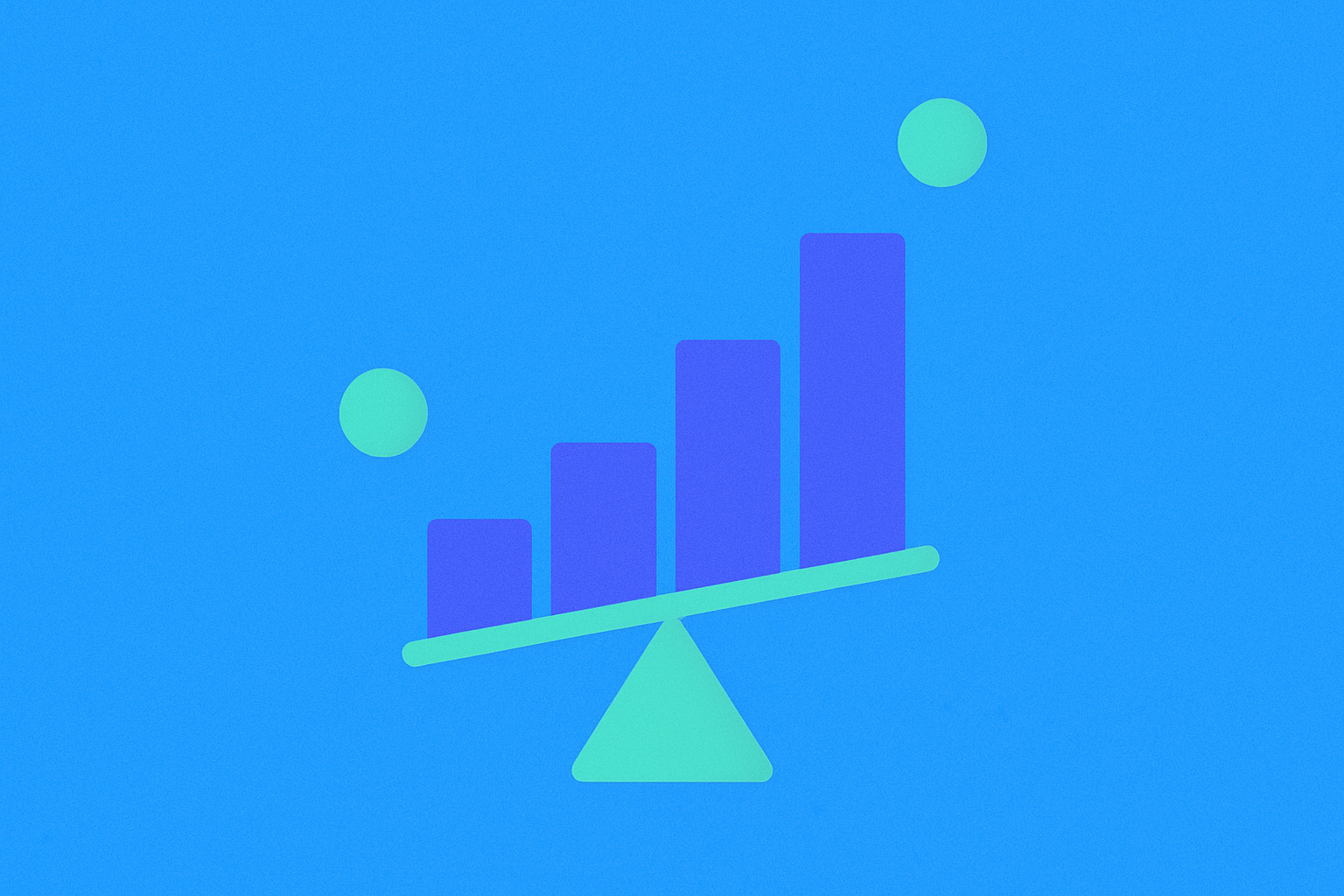
Leverage is the use of borrowed funds or financial derivatives to boost potential investment returns. It enables individuals and organizations to expand their market purchasing power, but it also increases the risk of losses. The leverage ratio represents the relationship between equity invested and the total amount of assets controlled.
Historical Context and Evolution of Leverage
Leverage has existed for centuries as a core element of economic practice. Traditionally, it was most common in real estate finance and trade. In today's financial environment, leverage has evolved to include instruments like margin trading, leveraged ETFs, and derivatives such as options and futures. Technological advances have played a major role in making these tools more accessible to a wider range of investors and in improving risk management frameworks.
Leverage in Modern Financial Markets
Today, both institutional and retail investors widely use leverage in financial markets. For instance, leveraging stock purchases allows investors to borrow from brokers to buy more shares than their available cash would permit. If share prices rise, this can multiply returns; if prices fall, losses can be substantial.
Leverage in forex markets similarly allows traders to control large positions with a relatively small capital outlay. Recent regulatory studies show that margin debt has reached high levels, signaling widespread adoption of leverage among investors. This trend demonstrates increasing confidence—or even speculative optimism—among traders, but it also raises the possibility of greater market volatility and heightened personal financial risk.
Impact of Leverage on the Technology Sector
The technology sector is recognized for rapid growth and significant capital needs. Companies in this space frequently use leverage to fund expansion and innovation. Tech firms may issue bonds or take on debt to finance operations without diluting shareholder equity. This approach is especially effective when interest rates are low, allowing companies to invest aggressively in R&D or acquire startups to strengthen their competitive edge.
However, high leverage ratios also expose tech companies to increased vulnerability during economic downturns or shifts in market sentiment. Excessive debt can make it difficult for companies to meet obligations if revenue drops or financing becomes more restrictive.
Trends and Outlook for Leverage Use
As financial markets grow more complex, leverage continues to develop. Digital platforms and trading apps have democratized leveraged trading, giving more individuals access. However, this also raises concerns about excessive risk-taking, particularly among inexperienced investors.
Regulators are monitoring these developments closely and may implement new measures to ensure that leverage is balanced by sound risk management. Stricter margin trading rules and tighter financial institution requirements may be introduced to limit systemic risk and safeguard investors.
Risk Management When Using Leverage
Robust risk management is essential when employing leverage. Investors and traders should set clear position limits, use stop-loss orders, and diversify their portfolios. Understanding leverage mechanisms and their associated risks is crucial for successful trading. Education and disciplined trading practices are vital to minimizing the chance of severe losses.
Conclusion
Leverage remains a powerful financial tool, capable of increasing returns but also magnifying losses. Its use spans sectors such as technology and investment, making it a critical part of modern financial strategies. While leverage offers significant benefits, it demands diligent risk management and regulation to address its inherent risks. Successful leverage use relies on deep understanding, ongoing education, and a commitment to responsible trading practices.
FAQ
What is leverage? How does it work?
Leverage lets borrowers obtain loans by providing more collateral than the loan amount. For example, pledging $150 to borrow $100. Interest rates automatically adjust based on supply and demand, offering higher yields as demand increases.
How can you use leverage in stock and forex trading?
Leverage allows traders to use borrowed capital to increase trade size and potential profits. The leverage ratio determines the scale of assets controlled. Higher leverage amplifies both gains and losses from price movements.
What are the main risks of leverage, and how are they managed?
Key risks include amplified losses, liquidity risk, and margin calls. Manage these by setting stop-loss levels, maintaining adequate margin, controlling leverage ratios, diversifying positions, and monitoring market volatility. Effective risk management is critical to trading success.
What do different leverage ratios (such as 1:10, 1:50, 1:100) mean for traders?
Different leverage ratios enable traders to make larger trades with less capital. A 1:10 ratio means you control $10 with a $1 deposit; 1:100 means $100 with $1. Higher leverage increases profit potential but also raises the risk of loss. Select a leverage level suited to your experience and risk management approach.
How does leverage differ from margin?
Leverage refers to using borrowed funds to increase trade size, while margin is the collateral required to open positions. Leverage carries higher risk, while margin serves as proof of obligations.

Understanding Crypto Futures: A Beginner's Guide to Trading

Funding Rate in Crypto

Futures Là Gì? Cách Chơi Futures Cho Người Mới

Differences Between USDT-M Futures and Coin-M Futures

Understanding Leverage in Simple Terms

Understanding Crypto Hedging Techniques

What is BULLA coin: analyzing whitepaper logic, use cases, and team fundamentals in 2026

What is on-chain data analysis and how does it reveal whale movements and active addresses in crypto?

What is Vodra (VDR) crypto: whitepaper logic, use cases, and fundamentals analysis for 2026
How do cryptocurrency competitors compare in market share, performance, and user adoption in 2026?

What is on-chain data analysis and how does it predict crypto market trends