
LCP_hide_placeholder
fomox
MarketsPerpsSpotSwapMeme Referral
More
Smart Money Recruitment
Search Token/Wallet
/

Permissionless Blockchain

2026-01-18 05:21:45
Bitcoin
Blockchain
Crypto Tutorial
Ethereum
Web 3.0
Article Rating : 3.5
half-star
165 ratings
This comprehensive guide explores public blockchain networks, focusing on permissionless blockchains that allow open participation without central authority approval. Permissionless blockchains like Bitcoin and Ethereum offer transparency, anonymity through cryptography, decentralization, and open-source code, enabling anyone with internet access to join, transact, and validate transactions. The article contrasts permissionless systems with permissioned blockchains used by enterprises for privacy control, highlighting their distinct use cases and regulatory applications. While permissionless blockchains provide superior security, decentralization, and censorship resistance, they face scalability challenges and slower transaction speeds. This guide addresses key questions about network participation, security mechanisms, and practical applications, helping readers understand how permissionless blockchain technology balances decentralization with operational trade-offs through emerging layer-2 solutions and sca
Permissionless Blockchain

Definition and Core Concept

Permissionless blockchains are open networks that allow anyone to participate in the consensus process without the need to obtain approval, permission, or authorization from any central authority or governing body. This fundamental characteristic distinguishes them from traditional centralized systems and permissioned blockchain networks.

In a permissionless blockchain environment, participation is truly open and democratic. Any individual or entity with an internet connection can join the network, contribute to its operations, and benefit from its services without requiring verification of identity or credentials. This open-access model embodies the original vision of blockchain technology as a tool for democratizing access to financial and data systems.

Key Characteristics

Permissionless blockchains exhibit several defining characteristics that set them apart from other types of distributed ledger systems:

  • Transparency of Transactions: All transactions recorded on a permissionless blockchain are visible to every participant in the network. This complete transparency ensures that all activities can be audited and verified by anyone, creating an environment of accountability. For example, anyone can view Bitcoin transactions on its public ledger, though the identities behind wallet addresses remain pseudonymous.

  • Anonymity: While transactions are transparent, the identities of participants are typically protected through cryptographic techniques. Users interact with the network through pseudonymous addresses rather than revealing personal information, providing a balance between transparency and privacy.

  • Absence of Central Authority: No single entity controls or governs the network. Decision-making power is distributed among all participants, typically through consensus mechanisms. This decentralization prevents any single point of failure or control, making the system more resilient to censorship and manipulation.

  • Open-Source Code: The underlying code of permissionless blockchains is typically publicly available and open to review. This transparency allows developers worldwide to audit the code for security vulnerabilities, propose improvements, and build applications on top of the blockchain. The open-source nature fosters innovation and community-driven development.

Representative Examples

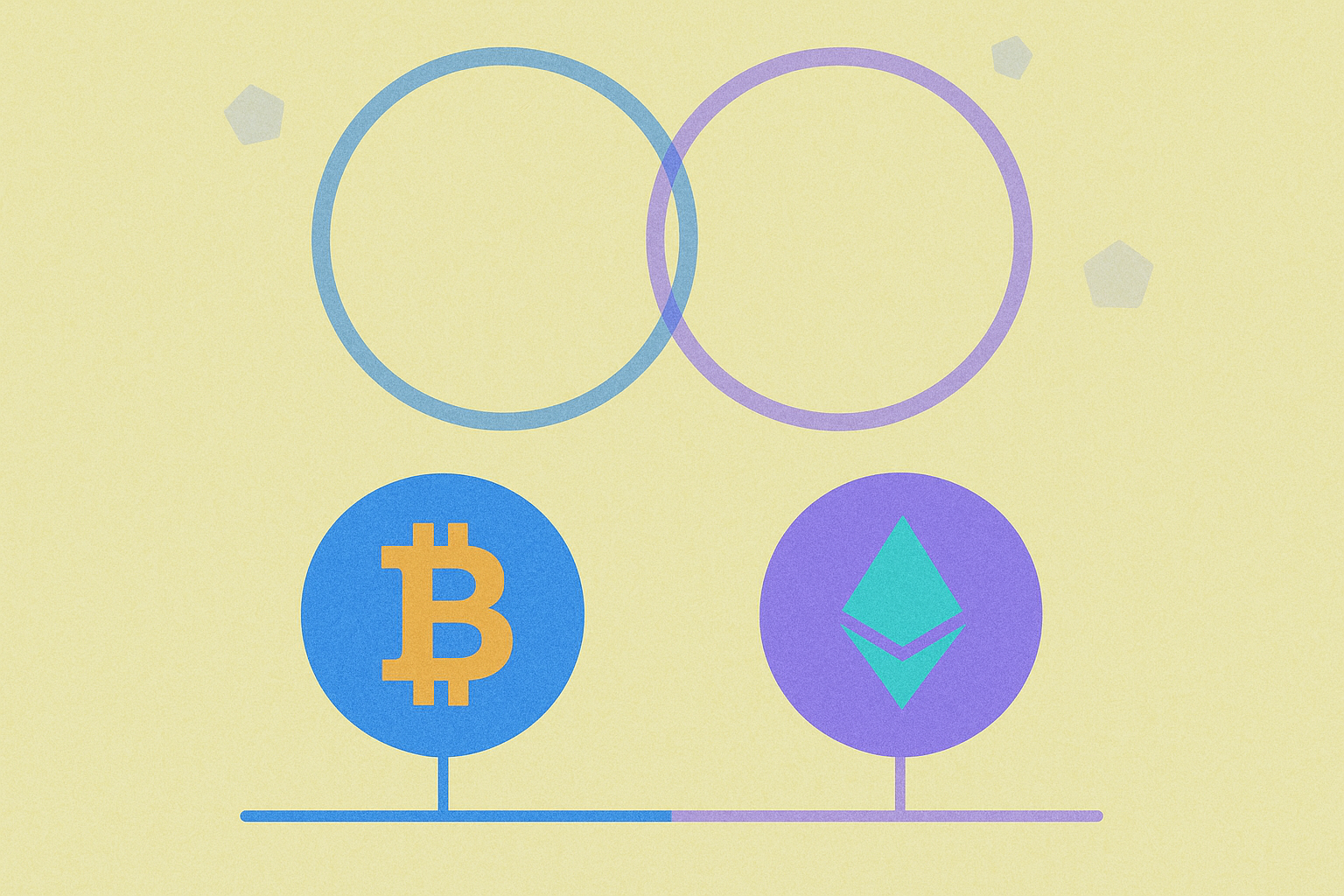
Several prominent permissionless blockchains have demonstrated the viability and potential of this technology model. Bitcoin, the first and most well-known cryptocurrency, operates on a permissionless blockchain where anyone can participate in mining, transaction validation, and network maintenance. Ethereum has expanded the concept by introducing smart contract functionality, enabling developers to build decentralized applications without permission.

Other mainstream public chains have also adopted the permissionless model, each offering unique features and capabilities. Any user with an internet connection has the ability to join these networks, send and receive transactions, view and contribute to the code, operate a node, and participate in the consensus process. This open participation model has led to the creation of diverse ecosystems of applications, services, and communities around these blockchain platforms.

Comparison with Permissioned Blockchains

Permissioned blockchains, on the other hand, are usually controlled by a centralized entity or consortium of organizations. Commonly known as private blockchains, such networks have limits on who can verify transactions and interact with the information recorded on their distributed ledgers.

Private blockchains are typically used by enterprises that aim to utilize blockchain technology but want to ensure that specific information remains private, for either regulatory or competitive reasons. For instance, financial institutions may use permissioned blockchains to streamline interbank settlements while maintaining confidentiality of transaction details. Supply chain networks might employ private blockchains to track goods among known partners without exposing sensitive business information to the public.

The choice between permissionless and permissioned models often depends on the specific use case, regulatory requirements, and the desired balance between openness and control. While permissioned blockchains offer greater control and privacy, they sacrifice the decentralization and censorship resistance that make permissionless blockchains attractive for many applications.

Advantages and Trade-offs

Permissionless blockchains are typically more secure as the possibility of collusion by bad actors within the network is reduced. The distributed nature of these networks, combined with their open participation model, makes it extremely difficult for any single entity or group to manipulate the system. The larger the network of participants, the more secure it becomes against attacks.

However, permissionless blockchains can be relatively slow as they face scalability issues. They can only authenticate a limited number of transactions in a given time, which can lead to network congestion during periods of high demand. This limitation stems from the need to achieve consensus among a large number of independent participants, a process that inherently takes more time than centralized validation.

In a nutshell, permissionless blockchains offer decentralization and are open to everyone, while permissioned models are more centralized and restrictive. This isn't without sacrifice as decentralization usually comes at the cost of speed and scalability. The ongoing development of layer-2 solutions, sharding, and other scaling technologies aims to address these limitations while preserving the core benefits of permissionless systems. The trade-off between decentralization, security, and scalability remains a central challenge in blockchain technology, often referred to as the blockchain trilemma.

FAQ

What is a Permissionless Blockchain? What are its core characteristics?

A permissionless blockchain is an open network where anyone can participate and transact without requiring approval from any central authority. Its core features are decentralization, transparency, and accessibility. No permission needed to join, validate transactions, or access the network.

What is the difference between Permissionless Blockchain and Permissioned Blockchain?

Permissionless blockchains allow anyone to participate and validate transactions, while permissioned blockchains restrict access to authorized users. Permissionless offers decentralization and transparency, whereas permissioned provides better control and customization for enterprises.

What are the main advantages and disadvantages of permissionless blockchain?

Advantages: Decentralization, censorship resistance, and open access for anyone. Disadvantages: Lack of regulation, slower transaction speed, and scalability challenges.

Are Bitcoin and Ethereum permissionless blockchains? Provide examples.

Yes, both Bitcoin and Ethereum are permissionless blockchains. Anyone with internet access can join, transact, and run nodes without requiring special permission or approval from any central authority.

How does a permissionless blockchain ensure network security and prevent malicious behavior?

Permissionless blockchains ensure security through decentralized consensus mechanisms, cryptographic validation, and distributed node networks. Proof-of-Work or Proof-of-Stake makes attacks economically unfeasible. Immutable ledgers and transparent transactions deter malicious actors while maintaining system integrity.

What challenges does permissionless blockchain face in practical applications?

Permissionless blockchains encounter security vulnerabilities, scalability limitations, regulatory uncertainty, and energy consumption concerns. They struggle with transaction finality, network congestion, and balancing decentralization with governance efficiency.

What are the advantages of permissionless blockchains compared to centralized systems?

Permissionless blockchains offer greater decentralization, enabling broader network participation and eliminating single points of failure. They provide enhanced security, transparency, and user autonomy while reducing reliance on intermediaries for transactions and data management.

How to participate in mining or validating transactions on a permissionless blockchain?

On permissionless blockchains, anyone can join the network and participate in mining or transaction validation without central authority approval. Simply run a node, stake assets if required by the consensus mechanism, and start validating transactions directly to earn rewards.

* The information is not intended to be and does not constitute financial advice or any other recommendation of any sort offered or endorsed by Gate.

Share

Content

Definition and Core Concept

Key Characteristics

Representative Examples

Comparison with Permissioned Blockchains

Advantages and Trade-offs

FAQ

Related Articles
Top Decentralized Exchange Aggregators for Optimal Trading

Top Decentralized Exchange Aggregators for Optimal Trading

Exploring top DEX aggregators in 2025, this article highlights their role in enhancing crypto trading efficiency. It addresses challenges faced by traders, such as finding optimal prices and reducing slippage, while ensuring security and ease of use. A practical overview of 11 leading platforms is provided, with guidance on selecting the right aggregator based on trading needs and security features. Designed for crypto traders seeking efficient and secure trading solutions, the article emphasizes the evolving benefits of using DEX aggregators in the DeFi landscape.
2025-11-30 07:47:05
What is OpenSea? Complete Guide to the Leading NFT Marketplace

What is OpenSea? Complete Guide to the Leading NFT Marketplace

# Comprehensive Guide to Understanding NFT Marketplaces OpenSea stands as the world's largest decentralized NFT marketplace, enabling users to buy, sell, and trade unique digital assets across multiple blockchain networks including Ethereum, Polygon, and Solana. This comprehensive guide equips beginners and experienced traders with essential knowledge about OpenSea's features, fee structure, security protocols, and practical trading strategies. From wallet setup and NFT purchasing to creating collections and navigating competitive advantages, the article addresses key questions for collectors, creators, and investors entering the digital asset space. With multi-blockchain support, user-friendly interfaces, and a thriving community of three million active users, OpenSea provides the infrastructure for exploring blockchain-based ownership and monetization opportunities. Whether you're an artist seeking new revenue streams, a collector building digital portfolios, or a curious investor, this guide delivers acti
2026-01-01 05:28:04
Understanding Bitcoin's Supply Limit: How Many Bitcoins Exist?

Understanding Bitcoin's Supply Limit: How Many Bitcoins Exist?

The article delves into Bitcoin's finite supply of 21 million coins, shedding light on its implications for the cryptocurrency ecosystem. It explores how Bitcoin's halving mechanism controls supply, impacting mining rewards and inflation. The piece also discusses what happens after all coins are mined, the role of transaction fees, and introduces the Lightning Network's innovation for scalability. Addressing the loss and theft of bitcoins, it highlights security challenges and advancements. Ideal for crypto enthusiasts and investors, the article explains Bitcoin's value proposition rooted in scarcity and decentralization.
2025-12-04 15:56:34
What Is the Current Market Overview for Cryptocurrencies in December 2025?

What Is the Current Market Overview for Cryptocurrencies in December 2025?

In December 2025, cryptocurrencies exhibit notable trends, with Bitcoin maintaining its dominance at a market cap of $1.2 trillion. Total crypto market capitalization has surged to $3.18 trillion, driven by significant trading activity and Bitcoin's recovery. The top five cryptocurrencies account for 75% of market liquidity, showcasing concentrated activity among major assets like Ethereum, Solana, USDC, and XRP. Major exchanges, including Gate, now list over 500 assets, reflecting growth in asset diversity and institutional adoption. This article targets investors and financial institutions, providing insights into market dynamics, liquidity concentration, and asset diversification.
2025-12-04 02:18:11
How Does On-Chain Data Analysis Reveal Bitcoin Market Trends in 2025?

How Does On-Chain Data Analysis Reveal Bitcoin Market Trends in 2025?

The article explores the significance of Bitcoin's on-chain data analysis to understand market trends in 2025. It examines key metrics like MVRV ratio, active addresses, and transaction volume, highlighting their implications for market dynamics. The discussion covers whale distribution impacts and the correlation of on-chain fees with market performance, providing insights useful for traders and institutional investors. The structured analysis offers a clear understanding of Bitcoin market trends through detailed examination of technical indicators and investor behavior. This content is tailored for financial analysts and cryptocurrency enthusiasts aiming to predict market movements effectively.
2025-12-02 01:03:31
Layer 2 Scaling Made Easy: Bridging Ethereum to Enhanced Solutions

Layer 2 Scaling Made Easy: Bridging Ethereum to Enhanced Solutions

The article delves into Layer 2 solutions, focusing on optimizing Ethereum's transaction speed and cost efficiency through bridging. It guides users on wallet and asset selection, outlines the bridging process, and highlights potential fees and timelines. The article caters to developers and blockchain enthusiasts, providing troubleshooting advice and security best practices. Keywords like "Layer 2 scaling," "bridge services," and "optimistic rollup technology" enhance content scannability, aiding readers in navigating Ethereum's ecosystem advancements.
2025-10-30 08:39:44
Recommended for You
How Much Will Chiliz CHZ Price Be in 2030 With Current Volatility and Support Resistance Levels

How Much Will Chiliz CHZ Price Be in 2030 With Current Volatility and Support Resistance Levels

This article provides a comprehensive analysis of Chiliz (CHZ) price dynamics and 2030 projections amid current market volatility. Currently trading at $0.043 with 7.65% volatility, CHZ faces critical support at $0.040 and resistance at $0.0443. The token has declined significantly from its 2021 peak of $0.2834, entering a consolidation phase that establishes essential technical boundaries. Technical analysis converges on an average 2030 price target of $0.343, reflecting measured growth potential driven by sports blockchain adoption and ecosystem expansion. The article examines how support-resistance levels determine near-term direction, analyzes historical price patterns, and evaluates risk-return potential for long-term investors. By synthesizing technical indicators and fundamental catalysts within the Socios.com platform, readers gain clarity on CHZ's trajectory through 2030 while understanding market constraints and growth catalysts shaping cryptocurrency valuations.
2026-02-06 04:07:30
What is NIGHT (Midnight) crypto coin market cap and trading volume in 2026?
What is NIGHT (Midnight) crypto coin market cap and trading volume in 2026?

This comprehensive guide examines NIGHT (Midnight) cryptocurrency's market position in February 2026, featuring a market cap of $801.49 million with 16.61 billion circulating tokens from a 24 billion maximum supply. The article analyzes 24-hour trading volume of $7.59 million across major exchanges including KuCoin, MEXC, and BitMart, where NIGHT trades at varying prices reflecting liquidity differences. Covering price volatility since the December 2025 launch, token utility within the privacy-focused Midnight Network, and cross-exchange trading dynamics, this resource provides traders and investors with essential metrics for understanding NIGHT's market performance, liquidity conditions, and trading opportunities. The guide also addresses key FAQs about the Cardano-integrated privacy blockchain project led by Charles Hoskinson.
2026-02-06 04:05:12
How does Fed policy and inflation data impact crypto prices in 2026

How does Fed policy and inflation data impact crypto prices in 2026

This article examines how Federal Reserve monetary policy and inflation data shape cryptocurrency valuations in 2026. It explores three primary transmission mechanisms: Fed rate adjustments impact crypto through institutional capital flows and derivatives positioning, with $6.7 billion in futures open interest demonstrating substantial market participation; CPI releases trigger rapid price discovery in Bitcoin and Ethereum as investors reassess inflation hedging strategies and policy expectations; and traditional asset spillovers create synchronized declines across cryptocurrencies, equities, and gold during high-uncertainty periods through liquidity shocks and deleveraging cascades. The analysis demonstrates that institutional adoption has strengthened correlations between macroeconomic fundamentals and crypto prices. For crypto traders, institutional investors, and portfolio managers, understanding these interconnected mechanisms is essential for navigating 2026's price movements and managing exposure acros
2026-02-06 04:03:17
How can on-chain data analysis predict ATOM price movements and whale behavior in Cosmos?

How can on-chain data analysis predict ATOM price movements and whale behavior in Cosmos?

This article explores how on-chain data analysis predicts ATOM price movements and whale behavior in the Cosmos ecosystem. It reveals critical blockchain signals: declining active addresses and transaction volume reflect governance concerns, while a 12.11 million ATOM unstaking surge triggered a 33% price crash from $6.15 to $4.62. IBC transfer volume collapsed 38% with unique participants dropping 48%, signaling weakening interoperability. The piece analyzes on-chain fee trends, Replication Security adoption, and Liquid Staking Module performance as network stress indicators. Essential for traders, the article demonstrates how monitoring whale transactions, validator staking dynamics, and blockchain metrics through platforms like Dune Analytics enables accurate ATOM price prediction and informed investment decisions in the Cosmos network.
2026-02-06 04:01:15
What is Sky Protocol (SKY) and how does its whitepaper core logic differ from traditional DeFi platforms?

What is Sky Protocol (SKY) and how does its whitepaper core logic differ from traditional DeFi platforms?

Sky Protocol (SKY) represents a transformative evolution from MakerDAO, distinguished by modular governance architecture and real yield mechanisms fundamentally different from traditional DeFi platforms. The protocol generates sustainable income through ecosystem units like Spark Protocol, redirecting revenue directly to SKY token holders while attracting institutional capital. USDS stablecoin innovations leverage SkyLink's cross-chain infrastructure to enable seamless interoperability across Ethereum, Base, Arbitrum, Optimism, and other blockchains. SubDAOs like Spark Protocol distribute governance responsibilities, with projections of $79 billion TVL by 2026. Sky Protocol's transition toward Hybrid Finance (HyFi) integrates real-world assets with blockchain infrastructure, combining DeFi transparency and efficiency with institutional-grade security and 24/7 market accessibility.
2026-02-06 03:59:14
How do derivatives market signals predict crypto price movements: futures open interest, funding rates, and liquidation data analysis

How do derivatives market signals predict crypto price movements: futures open interest, funding rates, and liquidation data analysis

This comprehensive guide reveals how derivatives market signals predict cryptocurrency price movements with 60-75% accuracy. Analyze futures open interest accumulation—$2.1 billion in MON holdings signals institutional conviction for long-term growth. Monitor funding rates below 0.01% for contrarian entry opportunities and recognize capitulation phases. Track liquidation cascades across Gate and other major venues; $16.3 billion multi-head liquidations demonstrate how overleveraged positions trigger volatility spikes within 24-48 hours. Combine three critical metrics: open interest trends, funding rate reversals, and liquidation clusters to identify market extremes and timing optimal trades. Whether institutional or retail, understanding these derivatives signals enables sophisticated price prediction strategies and risk management in volatile crypto markets.
2026-02-06 03:56:08