
LCP_hide_placeholder
fomox
MarketsPerpsSpotSwapMeme Referral
More
Smart Money Recruitment
Search Token/Wallet
/

Asynchronous

2026-01-20 20:19:10
Blockchain
Crypto Tutorial
Web 3.0
Web3 wallet
Article Rating : 3
115 ratings
This comprehensive guide explores asynchronous programming, a fundamental concept enabling independent, non-blocking operations crucial for modern blockchain and distributed systems. Asynchronous processes operate at their own pace without requiring synchronized coordination, making them ideal for decentralized networks spanning multiple geographic regions. The article outlines key advantages including enhanced scalability, improved resilience, and faster transaction processing compared to synchronous alternatives. Through the Hedera Hashgraph example, it demonstrates how asynchronous consensus mechanisms achieve high throughput and low-latency performance. The guide also covers practical implementation details using JavaScript callbacks, Promises, and async/await, while addressing common pitfalls and best practices. Whether you're exploring blockchain technology or building distributed applications, understanding asynchronous programming is essential for achieving optimal network performance and reliability
Asynchronous

What Does Asynchronous Mean?

Asynchronous is a term used to describe processes that operate independently, without requiring simultaneous action or coordination. This concept is particularly important in technology and computer science, as it allows different parts of a system to function at their own pace without having to wait for a synchronized signal or event. In the context of blockchain technology, asynchronous refers to the ability of network nodes to process transactions and communicate with each other at different times, rather than depending on a single unified timing mechanism.

In asynchronous blockchain systems, each node operates according to its own schedule, allowing operations such as transactions and data exchanges to be handled at different times within the network. This stands in stark contrast to synchronous systems, where all operations must be aligned and occur simultaneously, often causing inefficiencies and bottlenecks. Asynchronous operations are fundamental to maintaining high throughput in blockchain networks, as they promote continuous data processing without waiting for consensus from all participants.

The strength of asynchronous systems lies in their flexibility and resilience. They are well-suited for environments where communication delays are unpredictable and frequent, such as in decentralized networks distributed across multiple geographic locations. Asynchronous blockchains are particularly robust because they can continue to function smoothly even if some parts of the network are slow or temporarily offline. This independence from a central timing source allows the blockchain to remain operational and efficient under a wide variety of conditions.

For example, in a traditional synchronous blockchain, if one node experiences a delay, it can slow down the entire network's ability to process transactions. However, in an asynchronous blockchain, other nodes can continue processing transactions independently, ensuring that the network maintains its performance level. This architectural advantage makes asynchronous blockchains especially valuable for global applications where network latency varies significantly across different regions.

Advantages of Asynchronous Blockchain Technology

Asynchronous blockchain technology offers significant advantages in terms of scalability, resilience, and processing speed. By decentralizing the transaction verification process, it allows networks to scale more effectively, handling a greater volume of transactions without a corresponding increase in delays or congestion. This is because each node processes transactions independently, thus distributing the workload more evenly across the entire network.

The scalability benefits are particularly evident when comparing asynchronous blockchains to their synchronous counterparts. In synchronous systems, the network's throughput is often limited by the slowest node, as all nodes must reach consensus simultaneously. Asynchronous systems eliminate this bottleneck by allowing faster nodes to process transactions without waiting for slower ones, significantly increasing the overall transaction capacity of the network.

Moreover, asynchronous blockchains are highly resistant to failures. Since nodes do not operate simultaneously, the failure or delay of one node does not hinder the functionality of others. This makes the network more robust against faults and capable of sustaining operations even under non-ideal conditions. This resilience is crucial for mission-critical applications where downtime can result in significant losses or disruptions.

Finally, asynchronous blockchains often achieve faster transaction processing times. Without the need for all nodes to reach consensus simultaneously, transactions can be completed more quickly, improving the network's ability to support dynamic and high-volume applications. This efficiency is fundamental for industries that require rapid processing capabilities, making asynchronous blockchain the preferred choice for many sectors seeking to leverage decentralized technology. Industries such as financial services, supply chain management, and real-time data verification particularly benefit from these performance characteristics.

Example of Asynchronous Blockchain Technology

Hedera Hashgraph exemplifies asynchronous blockchain technology, employing a unique consensus mechanism known as hashgraph, which allows it to operate without traditional blockchain structures. It utilizes a system of "gossip about gossip" and "virtual voting," where nodes rapidly and efficiently disseminate information throughout the network, achieving high throughput and low-latency consensus. image_url This configuration allows Hedera to process multiple transactions simultaneously, significantly increasing their speed and volume while maintaining security through asynchronous Byzantine Fault Tolerance (aBFT).
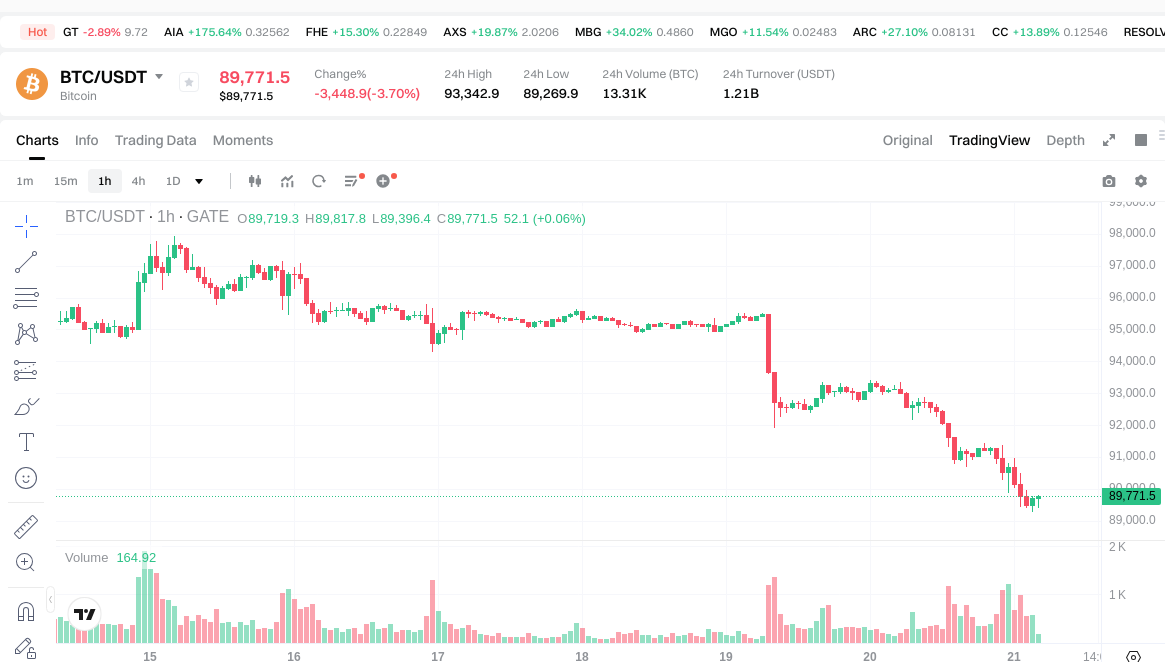
The gossip protocol works by having each node randomly share information with other nodes, which then share that information with additional nodes, creating an exponential spread of data across the network. This approach is highly efficient because it doesn't require a centralized coordination mechanism, and information propagates through the network at remarkable speed. The virtual voting mechanism then allows nodes to determine consensus without actually casting votes, instead calculating what each node would have voted based on the information they've received through gossip.

Furthermore, Hedera's architecture ensures fairness by recording transactions in the order they are received, making it suitable for applications that require rapid processing and high integrity, such as financial services and identity verification. The platform's ability to handle thousands of transactions per second while maintaining low fees and energy efficiency demonstrates the practical advantages of asynchronous blockchain technology in real-world applications. This makes Hedera particularly attractive for enterprise use cases where performance, security, and cost-effectiveness are all critical requirements.

FAQ

What is Asynchronous Programming? How does it differ from Synchronous Programming?

Asynchronous programming allows tasks to execute independently without blocking subsequent operations. Synchronous programming executes tasks sequentially, waiting for each to complete. Async enables better performance and responsiveness by handling multiple operations concurrently, while sync processes linearly and can cause delays.

What are the main application scenarios for asynchronous programming? Why use asynchronous instead of synchronous?

Asynchronous programming handles concurrent tasks efficiently in I/O operations, real-time data processing, and high-throughput transactions. It prevents blocking, improves system responsiveness, and maximizes resource utilization compared to synchronous approaches.

What are the main ways to implement asynchronous operations in JavaScript (callbacks, Promise, async/await)?

JavaScript offers three main async approaches: Callbacks execute functions after operations complete; Promises provide better control flow with .then() and .catch() methods; Async/await offers cleaner, more readable syntax by pausing execution until promises resolve, making code appear synchronous while remaining non-blocking.

What is Event Loop? How does it support asynchronous operations?

Event Loop is a mechanism that manages asynchronous tasks in JavaScript. It continuously checks for completed callbacks and executes them, allowing non-blocking operations. This enables crypto transactions and data processing to run concurrently without freezing the application interface.

What is the difference between Promise and async/await? When should each be used?

Promise is a foundation for asynchronous operations, returning a value eventually. Async/await is syntactic sugar built on Promises, offering cleaner, more readable code. Use async/await for modern, sequential async flows; use Promises for complex chaining or legacy compatibility.

What are common errors and pitfalls in asynchronous programming? How to avoid them?

Common async pitfalls include callback hell, unhandled promise rejections, and race conditions. Avoid them by using async/await syntax, proper error handling with try/catch, and careful state management. Always await promises and handle errors explicitly to prevent silent failures.

* The information is not intended to be and does not constitute financial advice or any other recommendation of any sort offered or endorsed by Gate.

Share

Content

What Does Asynchronous Mean?

Advantages of Asynchronous Blockchain Technology

Example of Asynchronous Blockchain Technology

FAQ

Related Articles
What is OpenSea? Complete Guide to the Leading NFT Marketplace
What is OpenSea? Complete Guide to the Leading NFT Marketplace

# Comprehensive Guide to Understanding NFT Marketplaces OpenSea stands as the world's largest decentralized NFT marketplace, enabling users to buy, sell, and trade unique digital assets across multiple blockchain networks including Ethereum, Polygon, and Solana. This comprehensive guide equips beginners and experienced traders with essential knowledge about OpenSea's features, fee structure, security protocols, and practical trading strategies. From wallet setup and NFT purchasing to creating collections and navigating competitive advantages, the article addresses key questions for collectors, creators, and investors entering the digital asset space. With multi-blockchain support, user-friendly interfaces, and a thriving community of three million active users, OpenSea provides the infrastructure for exploring blockchain-based ownership and monetization opportunities. Whether you're an artist seeking new revenue streams, a collector building digital portfolios, or a curious investor, this guide delivers acti
2026-01-01 05:28:04
What is OpenSea? Complete Guide to the Leading NFT Marketplace

What is OpenSea? Complete Guide to the Leading NFT Marketplace

# Understanding OpenSea: Comprehensive Insights into NFT Marketplaces OpenSea stands as the leading decentralized NFT marketplace, enabling users to buy, sell, and trade digital assets across 19 blockchains including Ethereum, Polygon, and Solana. This comprehensive guide addresses critical questions for artists, collectors, and traders seeking to navigate the NFT ecosystem safely and effectively. From wallet setup and transaction mechanics to security protocols and cost optimization, the article provides actionable insights for beginners and experienced users alike. Explore OpenSea's multi-blockchain infrastructure, competitive advantages, and evolving features like OS2, while understanding fee structures and risk mitigation strategies. Whether monetizing creative work, building digital collections, or entering Web3 commerce, this resource equips you with essential knowledge for successful NFT marketplace participation.
2026-01-02 05:18:21
Exploring MetaMask's Compatibility with Different Blockchain Networks

Exploring MetaMask's Compatibility with Different Blockchain Networks

Discover MetaMask's capabilities as a leading crypto wallet, designed to support Ethereum and EVM-compatible networks like Polygon, Arbitrum, and Binance Smart Chain. This article explores MetaMask's setup process, key features, pros, and cons, providing insights into its multi-network support for decentralized applications (dApps). It addresses the needs of crypto enthusiasts seeking a secure and versatile tool for managing digital assets. With straightforward instructions on wallet setup and use, the article is ideal for both beginners and seasoned crypto users to navigate Web3 applications effortlessly.
2025-11-29 08:23:44
Exploring Account Abstraction: What EIP 4337 Brings to the Table
Exploring Account Abstraction: What EIP 4337 Brings to the Table

Explore the groundbreaking concept of account abstraction and its implementation through EIP-4337. This innovation transforms Ethereum's account management by enabling smart contract wallets, enhancing security, and reducing entry barriers for mainstream users. The article delves into the evolution and comparison of AA solutions, highlights the technical framework of EIP-4337, and outlines significant security advancements. Perfect for developers, crypto enthusiasts, and businesses eager to leverage Ethereum's flexible, secure, and user-friendly infrastructure. Dive into Ethereum's account abstraction journey, ensuring a detailed understanding of its mechanics and potential.
2025-12-04 08:12:41
How to Create an NFT: Step-by-Step Guide for Beginners

How to Create an NFT: Step-by-Step Guide for Beginners

Discover how to create your first NFT image in a few easy steps. This comprehensive beginner's guide covers selecting a blockchain, setting up your wallet, using relevant platforms, and selling NFTs on Gate and other marketplaces.
2026-01-05 01:14:01
Mastering the Basics: A Comprehensive Guide to Private Keys

Mastering the Basics: A Comprehensive Guide to Private Keys

Explore the essentials of private keys in cryptocurrency with this comprehensive guide. Understand why "not your keys, not your coins" defines crypto ownership and security. Learn how private keys work, how to safeguard them, and their importance in protecting your digital assets. Discover different storage options, like hardware wallets, and get practical tips on maintaining key security. This article serves crypto enthusiasts and investors seeking to secure their assets effectively, ensuring they maintain control over their investments. Keyword focus: private keys, cryptocurrency security, digital asset protection.
2025-11-02 10:59:27
Recommended for You
What Is Zero-Knowledge Proof and How Does It Impact Blockchain?

What Is Zero-Knowledge Proof and How Does It Impact Blockchain?

This comprehensive guide explores zero-knowledge proofs (ZKPs), a revolutionary cryptographic technology enabling verification of information truthfulness without revealing underlying data itself. The guide addresses critical blockchain concerns: privacy preservation and transaction scalability for users and developers in cryptocurrency ecosystems. Readers learn how ZKPs work through intuitive examples, then discover advanced implementations including zk-SNARKs for privacy-focused transactions and zk-Rollups for Layer 2 scaling solutions deployed on major blockchains via Gate exchange platforms. The article covers practical use cases spanning digital identity verification, privacy-preserving DeFi transactions on Gate, shielded transactions via Zcash, and regulatory compliance solutions. Technical developments in zk-STARKs and developer toolkits make ZKP technology increasingly accessible, though computational limitations and security assumptions require consideration. This guide positions zero-knowledge proof
2026-01-20 22:28:17
Pi Network Launch Date in India: Essential Guide

Pi Network Launch Date in India: Essential Guide

This comprehensive guide explores Pi Network's anticipated mainnet launch timeline and its significance for Indian users, the world's fastest-growing mobile cryptocurrency community with over a million active participants. The article examines Pi Network's revolutionary mobile-first mining approach, which eliminates expensive hardware and technical barriers compared to Bitcoin or Ethereum, making cryptocurrency participation accessible to everyone via smartphones. It outlines the three-phase development roadmap, current KYC verification progress, and regional compliance processes shaping India's localized launch experience. The guide provides essential preparation steps including KYC completion, security circle expansion, and wallet setup, while highlighting critical security practices to protect digital assets. It details post-launch opportunities including Pi/INR trading on Gate and decentralized exchanges, dApp ecosystem development, and India-specific financial solutions. Ultimately, Pi Network's mainnet
2026-01-20 22:24:01
Sui (SUI) Price Prediction 2025 to 2030
Sui (SUI) Price Prediction 2025 to 2030

Sui is a high-performance Layer-1 blockchain engineered to overcome scalability and user experience barriers in decentralized systems. This comprehensive forecast analyzes SUI token price movements from 2025 to 2030, projecting base-case scenarios of $4-5 (2025), $5-7 (2026), $7-9 (2027), $10-14 (2028-2029), and $14-18 (2030), supported by ecosystem growth, developer activity, and transaction volume expansion. The analysis evaluates bullish catalysts including mainstream adoption and successful network upgrades, alongside bearish risks from competition and slower development. While a $100 valuation remains theoretically possible, realistic expectations focus on fundamental metrics including active users, DeFi adoption, and competitive positioning as key drivers of long-term value appreciation within the increasingly mature blockchain landscape.
2026-01-20 22:19:32
How to Get TRC20 Wallet Address Easily

How to Get TRC20 Wallet Address Easily

This comprehensive guide provides a complete roadmap for obtaining and managing your TRC20 wallet address on the TRON blockchain. Learn how to access TRON's high-performance network offering ultra-low transaction fees and lightning-fast processing speeds. The guide covers essential steps including choosing a reliable Web3 wallet, setting up your account securely, backing up your seed phrase, and accessing your unique TRC20 address. Discover critical security practices such as enabling two-factor authentication, protecting your private keys, and avoiding phishing attacks. Once set up, explore the vibrant TRON ecosystem including decentralized applications (dApps), DeFi opportunities through Gate, staking programs, NFT marketplaces, and passive income mechanisms. Whether you're a beginner entering cryptocurrency or an experienced investor diversifying across blockchains, this guide equips you with the knowledge to confidently secure your place in the decentralized financial future while maintaining complete ass
2026-01-20 22:16:25
What Are Blockchain-Powered Games?

What Are Blockchain-Powered Games?

This article explores blockchain gaming's transformation of the gaming industry through decentralized networks and tokenization. It distinguishes blockchain games from traditional gaming by emphasizing true asset ownership, play-to-earn mechanics, and real economic value. Players can collect fungible tokens through gameplay activities and trade NFTs on decentralized marketplaces, creating unprecedented earning opportunities. The article features five prominent blockchain games: Pixels (NFT farming on Ronin), Bigtime (multiplayer RPG), Sipher (Ethereum-based MOBA), Gods Unchained (strategic card battles), and Nyan Heroes (GameFi shooter). Each exemplifies unique gameplay mechanics while leveraging Web3 technology. A comprehensive FAQ section addresses key questions about blockchain gaming economics, asset ownership, security, and entry requirements. This guide serves gamers and crypto enthusiasts exploring decentralized gaming opportunities through Gate exchange integration and wallet management.
2026-01-20 22:12:54
What is Open AI Stock Symbol: Essential Guide for Crypto Users

What is Open AI Stock Symbol: Essential Guide for Crypto Users

OpenAI remains a private company with no official stock symbol on public exchanges, making direct equity investment through traditional brokerages impossible. The company operates under a unique capped-profit structure that limits investor returns and prevents typical IPO mechanisms. For investors seeking AI sector exposure, alternatives include purchasing shares of partnered companies like Microsoft and NVIDIA, investing in AI-focused ETFs, or exploring blockchain-based AI tokens through regulated exchanges like Gate. However, caution is essential: fraudulent platforms falsely claiming to offer OpenAI stock represent significant security risks and potential scams. Understanding the distinction between legitimate AI investment strategies and misleading opportunities protects investors while positioning them to capitalize on the rapidly expanding artificial intelligence market.
2026-01-20 22:11:00